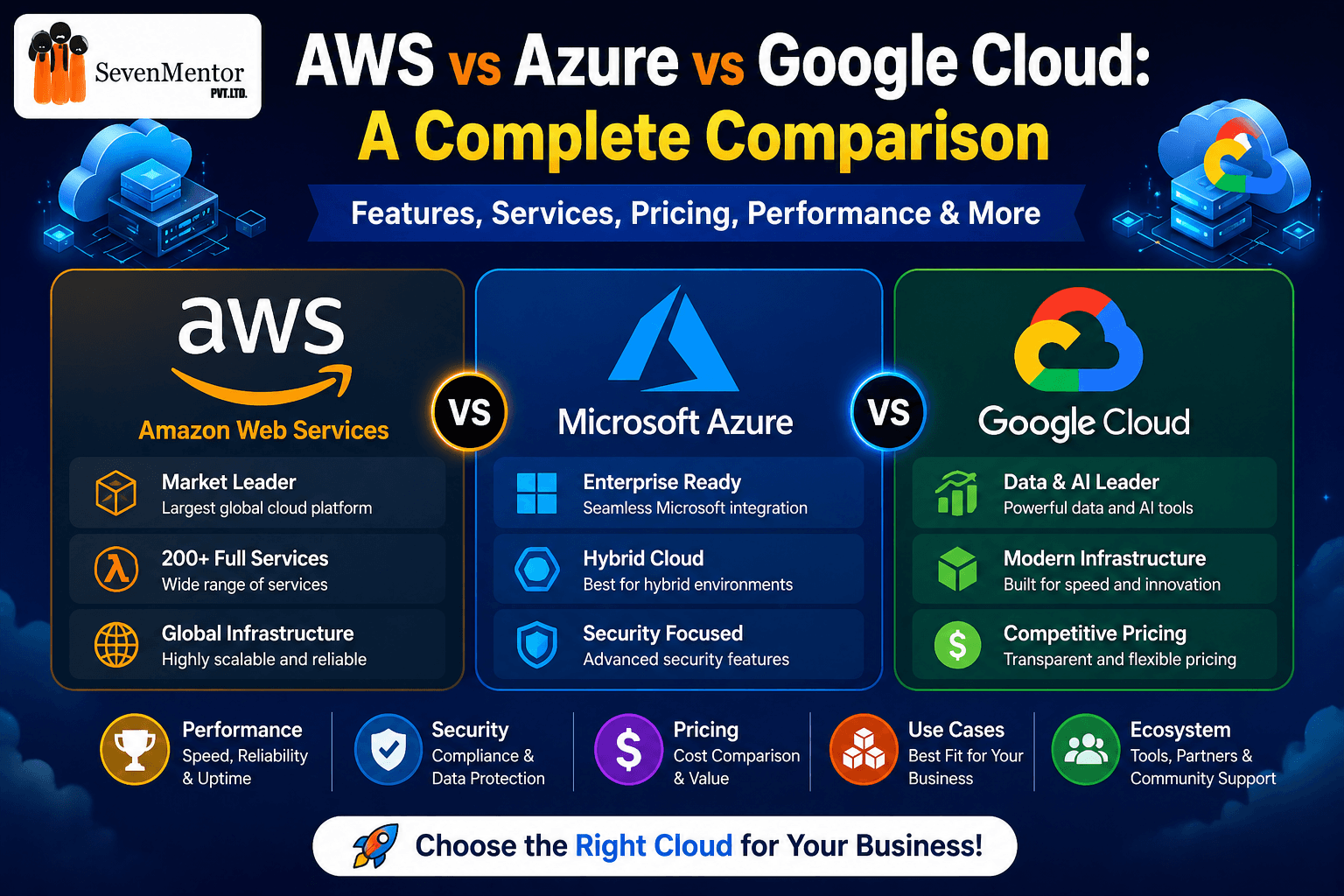
In this digital age, cloud computing is a must; it is the base of what makes modern businesses tick. Whether you are a startup, an enterprise, or an IT professional, your choice is important. Among the top players in the field, AWS vs Azure vs Google Cloud is what we hear discussed the most.
This in-depth guide will walk you through the differences, strengths, pricing models, services, and real-world applications of cloud computing platforms like Amazon Web Services, Microsoft Azure, and Google Cloud Platform.

What is cloud computing?

Before we get into AWS vs Azure vs Google Cloud, let’s go over the basics. Cloud computing is the provision of IT resources via the Internet, which we also know as “the cloud." Rather than owning physical equipment, companies lease out resources on demand.
For example, instead of going out and buying a server, you can put your application on Amazon Web Services or Microsoft Azure and only pay for what you use.
Benefits of Cloud Computing
Understanding the issue makes the AWS vs. Azure vs. Google Cloud a critical comparison.
1. Cost Efficiency.
You will pay for just the resources you use; we remove that up-front hardware cost issue.
2. Scalability
Easily scale up or down as demand changes.
3. Flexibility
Access your services from anywhere there is an internet connection.
4. Security
Leading cloud players put large investments in top-tier security systems.
5. Disaster Recovery
Cloud services provide for data backup and business continuity.
What is AWS?

Amazon Web Services (AWS), which we see today, was launched by Amazon in 2006. It has over 200 full-featured services, which include computing power, storage, databases, AI, and IoT.
Key Highlights of AWS
- Largest global market share
- Highly scalable infrastructure
- Strong ecosystem and community support
What is Azure?

Microsoft Azure has been out since 2010, which is a cloud platform from Microsoft. We see it largely to be used by enterprises, which also use other Microsoft products like Windows Server, Office 365, and Active Directory.
Key Highlights of Azure.
- Seamless integration with Microsoft tools
- Strong enterprise presence
- Hybrid cloud capabilities
Overview of AWS, Azure, and Google Cloud
In the top three of cloud computing, we have
- Amazon Web Services (AWS)
- Microsoft Azure
- Google Cloud Platform (GCP)
These large players run the global cloud market, and we see them offer up a wide range of services in computing, storage, AI, machine learning, and networking.
What is Google Cloud?

Cloud Platform (GCP) is to be noted for its work in data analytics, AI, and machine learning. Key Features of Google Cloud.
Key Highlights of Google Cloud
- Advanced AI and machine learning tools
- High-performance computing
- Strong data analytics capabilities
AWS vs Azure vs GCP: The Key Differences
When it comes to AWS vs Azure vs Google Cloud, which to choose is affected by:.
1. Market Share
- AWS leads globally
- Azure follows closely
- Google Cloud is growing rapidly
2. Pricing
- AWS: Pay when you use the model.
- Azure: Aggressive pricing with enterprise discounts.
- GCP: Flexible pricing that includes sustained use discounts.
3. Services
- AWS: The greatest number of services.
- Azure: Robust in enterprise tools.
- GCP: Best in data and AI.
4. Hybrid Cloud
- Azure excels in hybrid cloud solutions
- AWS and, in this space, GCP are growing.
5. Ease of Use
- GCP: Easy-to-use interface.
- AWS: Full of features but complex.
- Azure: Gentle slope of adoption.
Explore Other Demanding Courses
No courses available for the selected domain.
AWS Key Tools
Some of the popular AWS tools are the following:
- Elastic Cloud Compute virtual servers.
- S3 (Simple Storage Service) Object storage solution.
- RDS (Relational Database Service) managed databases.
- Lambda – Serverless computing
These products make AWS the preferred choice in the AWS vs Azure vs Google Cloud discussion
Azure Key Tools
Azure offers a wide range of enterprise-focused tools:
Azure works well for businesses that are in the Microsoft ecosystem.
Google Cloud Key Tools
Google Cloud stands out with:
- Compute Engine
- Cloud Storage
- BigQuery (data analytics powerhouse)
- TensorFlow (AI/ML framework)
GCP is the choice for data-driven applications. Looking at use cases that clarify AWS vs. Azure vs. Google Cloud in the real world.
Use Cases for AWS, Azure, and GCP
Understanding use cases helps clarify AWS vs Azure vs Google Cloud in real-world scenarios.
AWS Use Cases
- Web hosting and scalable applications
- Startups and SaaS platforms
- Gaming and mobile apps
Azure Use Cases
- Enterprise applications
- Hybrid cloud environments
- Microsoft-based infrastructures
GCP Use Cases
- AI/ML applications
- Big data analytics
- Real-time data processing
Disadvantages of AWS, Azure, and GCP
No platform is perfect. Here’s a balanced view:
AWS Disadvantages
- Complex pricing structure
- Steeper learning curve
Azure Disadvantages
- Occasional performance inconsistencies
- Complex interface for beginners
GCP Disadvantages
- Smaller market share
- Limited enterprise adoption compared to AWS and Azure
AWS vs Google Cloud vs Azure: Which Cloud Platform is Best?
There’s no one-size-fits-all answer in the AWS vs Azure vs Google Cloud comparison.
- Choose AWS for flexibility and service variety
- Choose Azure for enterprise integration
- Choose GCP for AI and data analytics
The best platform depends on your project requirements, budget, and technical expertise.
Ready to Start a Career as an AWS, Azure, and GCP Cloud Developer?
With cloud computing demand skyrocketing, learning AWS vs Azure vs Google Cloud can open doors to high-paying careers.
Career Opportunities
- Cloud Developer
- Cloud Architect
- DevOps Engineer
- Solutions Architect
Many training institutes (like SevenMentor) offer hands-on training in AWS, Azure, and GCP to help you build real-world skills.
Detailed Comparison Table: AWS vs Azure vs Google Cloud

Conclusion:
The debate around AWS vs Azure vs Google Cloud will continue as cloud technology evolves. Each platform has its strengths and ideal use cases.
If you're a beginner, start with one platform and gradually explore others. If you're a business, choose based on your technical requirements and long-term goals.
The future is undeniably cloud-driven—and mastering these platforms can position you at the forefront of innovation.
FAQs
1. What is the main difference between AWS, Azure, and Google Cloud?
The main difference lies in their strengths—AWS offers the most services, Azure excels in enterprise integration, and Google Cloud leads in AI and data analytics.
2. Which cloud platform is best for beginners?
Google Cloud is often considered beginner-friendly due to its simple interface, but AWS has more learning resources.
3. Is AWS better than Azure?
AWS has a larger market share, but Azure is better for companies using Microsoft products.
4. Which cloud platform pays the highest salary?
Professionals skilled in AWS, Azure, and GCP all earn competitive salaries, with AWS often slightly ahead due to demand.
5. Should I learn AWS, Azure, or Google Cloud first?
Start with AWS due to its popularity, then expand to Azure and GCP for broader career opportunities.
Related Links:
Popular AWS Courses and Certifications
Do visit our channel to know more: SevenMentor
SevenMentor
Expert trainer and consultant at SevenMentor with years of industry experience. Passionate about sharing knowledge and empowering the next generation of tech leaders.
Call the Trainer and Book your free demo Class..... Call now!!!
| SevenMentor Pvt Ltd.
© Copyright 2025 | SevenMentor Pvt Ltd.