Business Analyst Classes in Canada

feature-iconCompany analysts discover areas that can be improved to increase efficiency and strengthen company operations.
feature-iconThey frequently collaborate with people throughout the organization's structure to discuss their findings and help execute improvements.
feature-iconSevenMentor provides various Business Analyst Programs that covers all the aspects necessary for job growth.
020-71171500

Start Today!

CONSULT WITH
OUR ADVISORS

  • Course & Curriculum Details
  • Flexible Learning Options
  • Affordable Learning
  • Enrollment Process
  • Career Guidance
  • Internship Opportunities
  • General Communication
  • Certification Benefits

Learning Curve for Business Analyst in Canada
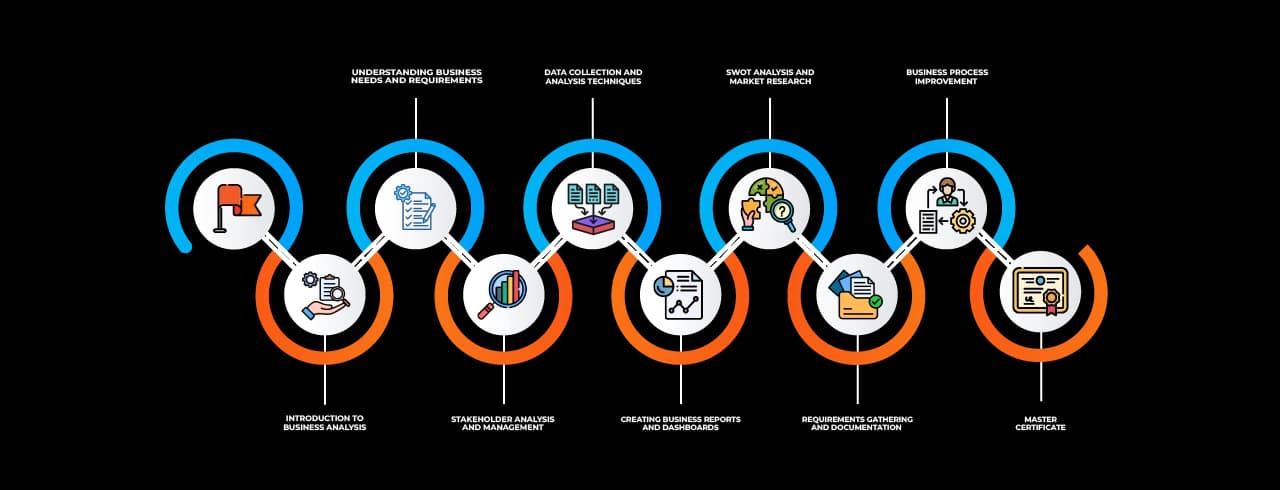
Learning curve for Business Analyst in Canada

Master In Business Analyst in Canada Course

OneCourseMultipleRoles

Empower your career with in-demand data skills and open doors to top-tier opportunities.

Business Analyst
Data Analyst
Business Intelligence Analyst
Product Analyst
Financial Analyst
Market Research Analyst
Systems Analyst
Process Analyst
Risk Analyst
Operations Analyst

Skills & Tools You'll Learn -

Python iconPythonA versatile programming language widely used for machine learning. R: A statistical computing language popular for data analysis and visualization. Scikit-learn: A powerful Python library for implementing machine learning algorithms.
Microsoft Excel iconMicrosoft ExcelSpreadsheet software for data analysis, visualization, and automation with formulas and macros.
Tableau  iconTableau Powerful data visualization tool for creating interactive dashboards and reports.
Power BI iconPower BIBusiness intelligence platform for data visualization, reporting, and analytics.
Google Data Studio iconGoogle Data StudioCloud-based BI tool for creating shareable and interactive reports.
SQL  iconSQL Language for querying, managing, and manipulating relational databases.
R Programming iconR ProgrammingStatistical computing and graphics programming language for data analysis.
SAS  iconSAS Advanced analytics and statistical software for data management and predictive modeling.
Apache Spark iconApache SparkBig data processing engine for large-scale analytics and real-time processing.
Hadoop  iconHadoop Open-source framework for distributed storage and big data processing.
KNIME  iconKNIME Open-source data analytics platform for visual workflow automation.
Alteryx  iconAlteryx Self-service data preparation and analytics tool for ETL and predictive modeling.
QlikView  iconQlikView Business intelligence tool for data visualization and associative analytics.
RapidMiner  iconRapidMiner Data science platform for machine learning, predictive analytics, and automation.
Looker  iconLooker Cloud-based BI tool for data exploration, visualization, and embedded analytics.
IBM Cognos iconIBM CognosEnterprise-level business intelligence and performance management software.

Why Choose SevenMentor Business Analyst in Canada

Empowering Careers with Industry-Ready Skills.

Specialized Pocket Friendly Programs as per your requirements

Specialized Pocket Friendly Programs as per your requirements

Live Projects With Hands-on Experience

Live Projects With Hands-on Experience

Corporate Soft-skills & Personality Building Sessions

Corporate Soft-skills & Personality Building Sessions

Digital Online, Classroom, Hybrid Batches

Digital Online, Classroom, Hybrid Batches

Interview Calls Assistance & Mock Sessions

Interview Calls Assistance & Mock Sessions

1:1 Mentorship when required

1:1 Mentorship when required

Industry Experienced Trainers

Industry Experienced Trainers

Class Recordings for Missed Classes

Class Recordings for Missed Classes

1 Year FREE Repeat Option

1 Year FREE Repeat Option

Bonus Resources

Bonus Resources

Curriculum For Business Analyst in Canada

BATCH SCHEDULE

Business Analyst in Canada Course

Find Your Perfect Training Session

Jan 4 - Jan 10

2 sessions
04
Sun
Classroom/ Online
Weekend Batch
10
Sat
Classroom/ Online
Weekend Batch

Jan 11 - Jan 17

1 sessions
12
Mon
Classroom/ Online
Regular Batch

Jan 18 - Jan 24

1 sessions
19
Mon
Classroom/ Online
Regular Batch

Learning Comes Alive Through Hands-On PROJECTS!

Comprehensive Training Programs Designed to Elevate Your Career

Customer Relationship Management (CRM) Analytics

Customer Relationship Management (CRM) Analytics

Employee Performance & HR Analytics

Employee Performance & HR Analytics

Financial Risk Assessment Model

Financial Risk Assessment Model

Sales Performance & Forecasting Dashboard

Sales Performance & Forecasting Dashboard

Supply Chain Optimization System

Supply Chain Optimization System

No active project selected.

Transform Your Future with Elite Certification

Add Our Training Certificate In Your LinkedIn ProfileLinkedIn

Our industry-relevant certification equips you with essential skills required to succeed in a highly dynamic job market.

Join us and be part of over 50,000 successful certified graduates.

Student 1
Student 2
Student 3
Student 4
Student 5
Join 15,258 others learning today
Certificate Preview

KEY Features that Makes Us Better and Best FIT For You

Expert Trainers

Industry professionals with extensive experience to guide your learning journey.

Comprehensive Curriculum

In-depth courses designed to meet current industry standards and trends.

Hands-on Training

Real-world projects and practical sessions to enhance learning outcomes.

Flexible Schedules

Options for weekday, weekend, and online batches to suit your convenience.

Industry-Recognized Certifications

Globally accepted credentials to boost your career prospects.

State-of-the-Art Infrastructure

Modern facilities and tools for an engaging learning experience.

100% Placement Assistance

Dedicated support to help you secure your dream job.

Affordable Fees

Quality training at competitive prices with flexible payment options.

Lifetime Access to Learning Materials

Revisit course content anytime for continuous learning.

Personalized Attention

Small batch sizes for individualized mentoring and guidance.

Diverse Course Offerings

A wide range of programs in IT, business, design, and more.

Course Content

About Business Analyst

In today's data-driven, innovation-led economy, the function of a business analyst has grown in importance. Companies in a variety of industries, including manufacturing, IT, healthcare, retail, and finance, require experts who can connect business requirements with technology. By assessing business procedures, determining needs, and providing executives and stakeholders with data-driven recommendations and reports, business analysts serve as this link. This technical content explores the structure, scope, and impact of Business Analyst Classes in Canada, with a detailed discussion on tools, methodologies, and real-world applications.


Understanding the Core of Business Analysis

Business Analysis as a discipline is grounded in identifying business needs and finding solutions to various problems. These solutions often include software-system development, process improvements, and organizational change. As part of Business Analyst training in Canada, students are trained to analyze data, draft effective documentation, conduct feasibility studies, and manage stakeholder expectations effectively.

In-depth knowledge of business systems, coupled with proficiency in tools like Microsoft Excel, SQL, Tableau, Power BI, JIRA, and business process modeling software, is imparted throughout the curriculum. The training also covers industry-standard methodologies such as BABOK (Business Analysis Body of Knowledge), Agile, Scrum, and Six Sigma, enabling participants to handle real-world challenges across various sectors.


Curriculum Overview and Tool Proficiency

The curriculum offered by institutions providing Business Analyst courses in Canada is structured to gradually develop analytical, technical, and interpersonal skills. The foundation phase includes training in business process modeling, gap analysis, requirement gathering, and stakeholder management. These topics are designed to give students a deep understanding of how to derive meaningful insights from business data.

Tools for data analysis and visualisation are the main topics of later sections. Because of its widespread use and robust features, Excel continues to be a fundamental analytical tool. The ability to query databases using SQL is essential for analysing structured data. To assist students in effectively communicating data-driven narratives to stakeholders, visualisation technologies such as Tableau and Power BI are introduced.

Additionally, the courses teach communication and documentation standards, such as how to create Use Case diagrams, Business Requirement Documents (BRDs), and Functional Requirement Documents (FRDs). Any working business analyst needs to have these documentation skills.


Project-Based Learning and Real-World Simulations

SevenMentor’s Business Analyst Classes in Canada offer project-based learning in the curriculum. At SevenMentor, for example, hands-on capstone projects simulate real-life industry problems. These simulations prepare students to work under realistic deadlines and constraints, applying the skills they’ve learned to deliver tangible business outcomes.

One such example may involve conducting a market trend analysis for a retail firm, identifying patterns in customer purchases, proposing system improvements, and presenting these findings in an executive-ready report. Such projects not only deepen understanding but also build a portfolio that proves valuable during job interviews and professional networking.


Career Pathways and Industry Demand in Canada

Graduates from SevenMentor Business Analyst courses in Canada find employment across a range of sectors, such as IT, finance, telecommunications, healthcare, insurance, and e-commerce. The increasing reliance on data-backed decision-making has resulted in a consistent demand for skilled professionals.

Typical roles include Junior Business Analyst, IT Business Analyst, Data Analyst, Functional Analyst, and eventually, roles like Product Owner or Business Systems Consultant. The average entry-level salary for Business Analysts in Canada is competitive and can significantly increase with experience, especially for those who demonstrate technical versatility and business acumen.

Moreover, many Canadian provinces have included Business Analysts under skill shortage categories, meaning international students who complete recognized Business Analyst training in Canada may also find viable pathways to work permits and permanent residency through provincial nomination programs.


Why Choose SevenMentor for Business Analyst Training?

SevenMentor, the best training institute for Business Analyst Training, delivers an industry-centric and practically focused curriculum that matches global standards. The trainers bring years of corporate experience to the classroom, ensuring that students understand not only the theory but also its application in real business scenarios.

The institute’s strong placement network, personalized mentoring, and integration of soft skills into the curriculum distinguish it from conventional training centers. Students are trained to become not only analysts but also communicators and strategic thinkers who can influence business decisions.

SevenMentor, the best training institute for Business Analyst Training also offers lifetime access to course materials and regular updates on emerging trends, ensuring students stay current even after completing their training.


Certifications and Professional Recognition

While not mandatory, certifications significantly boost a Business Analyst's employability. Recognized credentials like CBAP (Certified Business Analysis Professional), CCBA (Certification of Capability in Business Analysis), and ECBA (Entry Certificate in Business Analysis) are covered in most advanced modules of Business Analyst training in Canada.

SevenMentor prepares candidates for these certifications through mock exams, study groups, and one-on-one mentoring. Such support is crucial for students aiming for roles in companies that prefer or require certified professionals.


Soft Skills and Stakeholder Engagement

Beyond tools and techniques, effective Business Analysts need strong interpersonal and communication skills. Understanding client requirements, managing project expectations, and facilitating workshops or interviews are common tasks in a BA’s work routine.

Therefore, advanced Business Analyst Classes in Canada incorporate communication, leadership, and negotiation modules. This ensures that graduates can not only analyze but also influence and lead project teams toward meaningful outcomes.


Internships and Placement Support

To bridge the gap between academia and industry, many institutes offering Business Analyst courses in Canada provide internship assistance and job placement services. Internships give students their first exposure to professional environments, helping them understand organizational dynamics and polish their practical skills.

At SevenMentor, the best training institute for Business Analyst Training, dedicated placement officers assist with resume preparation, interview scheduling, and corporate tie-ups. Alumni feedback and case studies from successful placements further enhance students' confidence as they transition into full-time roles.

By enrolling in professional Business Analyst training in Canada, aspiring professionals position themselves for rewarding careers across multiple domains.

The robust technical curriculum, industry-relevant projects, and placement support offered by SevenMentor the best training institute for Business Analyst Training ensures that students are well-equipped to meet the evolving demands of the business world. Whether you're a recent graduate, IT professional, or someone looking to switch careers, investing in Business Analyst Classes in Canada is a decision that promises long-term returns.


Online Business Analyst Training

SevenMentor offers comprehensive online Business Analyst courses in Canada. These online sessions are conducted live with real-time interaction, replicating a classroom experience. Course materials, session recordings, and assignments are available through a centralized learning management system (LMS), enabling students to learn at their own pace.

Even in the online mode, the focus on project-based learning remains strong. Students work on collaborative assignments using virtual whiteboards and industry-grade tools. Weekly assessments and instructor feedback ensure continuous improvement and engagement. This remote mode of learning allows professionals to upskill without leaving their current jobs or relocating.


Corporate Business Analyst Course

SevenMentor offers customized corporate Business Analyst training in Canada. These programs are tailored according to the organization's industry, project lifecycle, and internal toolsets. The objective is to align Business Analysis practices with organizational goals, ensuring better project outcomes, cost control, and improved internal processes.

Corporate training can be delivered onsite or remotely, with modules ranging from foundational to advanced topics, including Agile BA practices, stakeholder engagement, and requirements engineering. Post-training, teams are often more aligned with strategic objectives and demonstrate improved efficiency in requirement management and solution delivery.

Frequently Asked Questions

Everything you need to know about our revolutionary job platform

1

Is being a business analyst an IT job?

Ans:
Business analysts can work in IT, but not necessarily. Business analysts in other industries are not often involved in IT, but they may require some knowledge of the subject.
2

Is becoming a business analyst a coding job?

Ans:
Business Analysts work with IT workers and procedures. They do not, however, participate in coding or programming; that is the responsibility of programmers. Functional testing, requirements formulation, and management are all responsibilities of business analysts.
3

What qualifications do business analysts have?

Ans:
AI Overview Plus 3 To work as a business analyst, you normally require a bachelor's degree in a relevant discipline, such as business or IT. You should also be proficient in fundamental technical skills, data analysis, and communication.
4

Which is preferable, BA or developer?

Ans:
The business analyst job is more suited for individuals who prefer taking the lead in a process, whereas the software development role is better suited for those who enjoy getting into the weeds of a process.
5

Is the position of business analyst entry-level?

Ans:
A career path for business analysts You may get entry-level work as a junior business analyst, or you could explore into finance or accounting. As you gain expertise, you may decide to specialise in a certain area of business, such as marketing or sales, or a sector, such as healthcare or computing.
6

Is Excel used by business analysts?

Ans:
Although professionals working in this industry use a variety of tools, platforms, and apps to manage data, Excel is a constant that nearly every Business Analyst uses. Business Analysts must be proficient in creating, formatting, and manipulating spreadsheets.
7

How much SQL is required by a business analyst?

Ans:
To do their duties properly, business analysts need to be familiar with SQL fundamentals. SQL is a common language used to interface with databases. It is a necessary tool for business analysts to access, retrieve, and analyse data.
8

How to Become a Business Analyst?

Ans:
A business analyst must have a combination of education, abilities, and experience. You can also obtain qualifications by taking courses or receiving certifications.
9

Do require an MBA to be a business analyst?

Ans:
While a bachelor's degree may suffice for an entry-level position, some employers prefer to hire candidates with an MBA. Business analyst applicants with advanced degrees are more likely to find work. There are other reasons to pursue an MBA.
10

What skills do business analysts need for placement?

Ans:
Key skills required for a Business Analyst position include strong data analysis abilities, proficient communication, problem-solving skills, business process modelling, data visualisation, domain knowledge, documentation, critical thinking, SQL proficiency, and the ability to clearly present complex information to stakeholders; demonstrating a strong understanding of business processes and how to identify areas for improvement is essential.
11

What really are the benefits of being a business analyst?

Ans:
A business analyst position provides numerous benefits, including strong career growth potential, diverse skill development in both technical and business domains, the ability to influence strategic decision-making, excellent communication and collaboration opportunities with various stakeholders, and a direct impact on improving business efficiency through data analysis and problem-solving.
12

What are a business analyst's top three strengths?

Ans:
A good business analyst must possess critical thinking, problem-solving skills, and decision-making abilities.
13

Who makes a good BA?

Ans:
A good business analyst has the proper talents. Some are soft, interpersonal talents; others are analytical modelling and structuring abilities. These comprise a "toolkit" from which the Business Analyst may draw as needed. Facilitation, negotiation, active listening, and presentation are all examples of soft skills.
14

What is the role of an ERP Business Analyst? What does it mean to be an ERP analyst?

Ans:
An ERP analyst is a business-savvy IT specialist who works on the development and maintenance of the Enterprise Resource Planning (ERP) program. ERP programs combine procedures and data from several divisions inside a firm. ERP analysts tailor the software to the company's requirements.
15

Is a business analyst an IT position?

Ans:
Yes, a business analyst can work in IT, especially if they specialise in IT business analysis. corporate analysts work across disciplines to improve corporate efficiency by bridging the gap between business and technology.
16

Is working as a business analyst a lucrative profession?

Ans:
Yes, business analysts can earn a lot of money, especially if they have the right abilities and expertise.

Explore Other Demanding Courses

No courses available for the selected domain.