Cloud Computing Course in Malegaon

feature-iconBoost Your IT Career with Hands-On Cloud Computing Training by SevenMentor
feature-icon Stay Ahead in the Digital Era with Advanced Cloud Computing Skills
feature-icon Learn Cloud Deployment, Management, and Automation from Expert Trainers

020-71173071

Start Today!

CONSULT WITH
OUR ADVISORS

  • Course & Curriculum Details
  • Flexible Learning Options
  • Affordable Learning
  • Enrollment Process
  • Career Guidance
  • Internship Opportunities
  • General Communication
  • Certification Benefits

Learning Curve for Cloud Computing
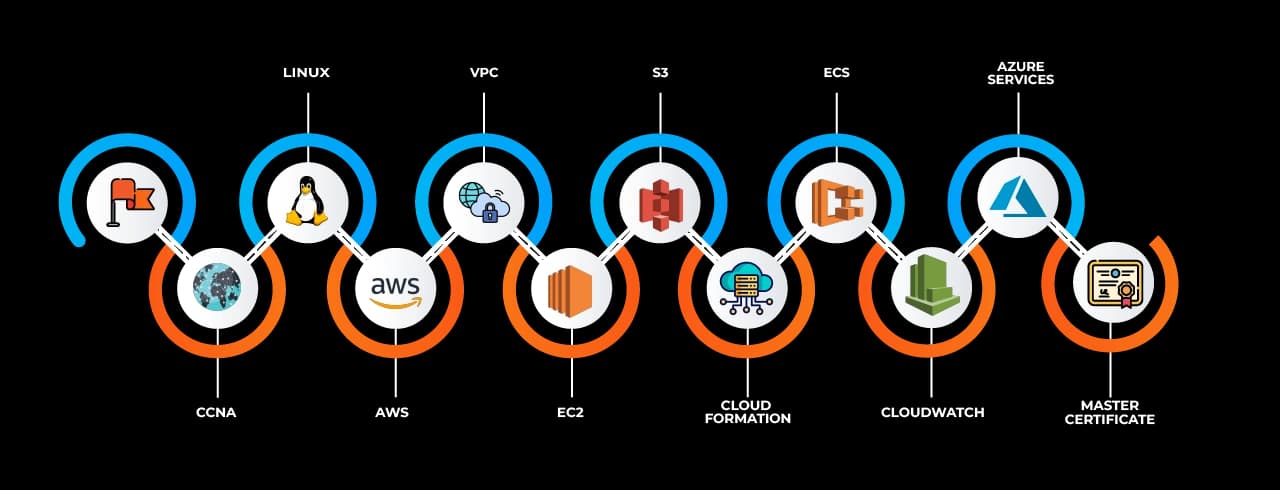
Learning curve for Cloud Computing

Master In Cloud Computing Course

OneCourseMultipleRoles

Empower your career with in-demand data skills and open doors to top-tier opportunities.

Cloud Architect
DevOps Engineer (Multi-Cloud)
Cloud Security Engineer
Cloud Operations Manager
Cloud Consultant
Cloud Systems Administrator
Cloud Application Developer
Cloud Migration Specialist
Cloud Product Manager
Cloud Engineer
Site Reliability Engineer (SRE)

Skills & Tools You'll Learn -

AWS SDKs iconAWS SDKsSoftware development kits that allow developers to integrate AWS services into applications using various programming languages.
CloudWatch  iconCloudWatch A monitoring service that collects and analyzes logs, metrics, and events for AWS resources and applications.
CloudTrail  iconCloudTrail A service that records AWS API calls for governance, compliance, and operational auditing.
IAM (Identity and Access Management) iconIAM (Identity and Access Management) A security service for managing user access, permissions, and authentication in AWS.
Cognito  iconCognito A service for adding authentication, authorization, and user management to web and mobile applications.
Inspector  iconInspector An automated security assessment service that detects vulnerabilities in AWS workloads.
Macie  iconMacie A data security service that uses AI to discover and protect sensitive data across AWS.
CloudHSM  iconCloudHSM A managed hardware security module for cryptographic key storage and encryption.
CloudFormation  iconCloudFormation An infrastructure-as-code service that automates the provisioning of AWS resources using templates.
OpsWorks  iconOpsWorks A configuration management service that automates deployments using Chef and Puppet.
CodeDeploy  iconCodeDeploy A service that automates application deployments across AWS and on-premises environments.
CodePipeline  iconCodePipeline A CI/CD service that automates the build, test, and deployment processes for applications.
Elastic Beanstalk iconElastic BeanstalkA platform-as-a-service (PaaS) that simplifies application deployment and management.
DynamoDB  iconDynamoDB A fully managed NoSQL database service for high-speed and scalable applications.
IaaS (Infrastructure as a Service) iconIaaS (Infrastructure as a Service)A cloud model that provides virtualized computing resources over the internet.
PaaS (Platform as a Service) iconPaaS (Platform as a Service)A cloud model offering development and deployment environments without managing infrastructure.
SaaS (Software as a Service) iconSaaS (Software as a Service)A cloud model where software applications are delivered over the internet on a subscription basis.
AWS Management Console iconAWS Management ConsoleAn easy-to-use web-based console of AWS services and resources
AWS CLI iconAWS CLI A command-line interface tool that automates various AWS-related processes through the execution of commands and scripts.
S3 (Simple Storage Service) iconS3 (Simple Storage Service)A flexible object storage service designed for secure data storage and retrieval.
EBS (Elastic Block Store) iconEBS (Elastic Block Store)A robust block storage service tailored for EC2 instances.
RDS (Relational Database Service) iconRDS (Relational Database Service)A fully managed relational database service that supports various database engines.

Why Choose SevenMentor Cloud Computing

Empowering Careers with Industry-Ready Skills.

Specialized Pocket Friendly Programs as per your requirements

Specialized Pocket Friendly Programs as per your requirements

Live Projects With Hands-on Experience

Live Projects With Hands-on Experience

Corporate Soft-skills & Personality Building Sessions

Corporate Soft-skills & Personality Building Sessions

Digital Online, Classroom, Hybrid Batches

Digital Online, Classroom, Hybrid Batches

Interview Calls Assistance & Mock Sessions

Interview Calls Assistance & Mock Sessions

1:1 Mentorship when required

1:1 Mentorship when required

Industry Experienced Trainers

Industry Experienced Trainers

Class Recordings for Missed Classes

Class Recordings for Missed Classes

1 Year FREE Repeat Option

1 Year FREE Repeat Option

Bonus Resources

Bonus Resources

Curriculum For Cloud Computing

BATCH SCHEDULE

Cloud Computing Course

Find Your Perfect Training Session

Jan 4 - Jan 10

2 sessions
04
Sun
Classroom/ Online
Weekend Batch
10
Sat
Classroom/ Online
Weekend Batch

Jan 11 - Jan 17

1 sessions
12
Mon
Classroom/ Online
Regular Batch

Jan 18 - Jan 24

1 sessions
19
Mon
Classroom/ Online
Regular Batch

Learning Comes Alive Through Hands-On PROJECTS!

Comprehensive Training Programs Designed to Elevate Your Career

 VPC Setup with Security Groups

VPC Setup with Security Groups

IAM Role & Policy Management

IAM Role & Policy Management

Static Website Hosting on S3

Static Website Hosting on S3

Serverless Portfolio Website

Serverless Portfolio Website

 Multi-Tier Architecture

Multi-Tier Architecture

No active project selected.

Transform Your Future with Elite Certification

Add Our Training Certificate In Your LinkedIn ProfileLinkedIn

Our industry-relevant certification equips you with essential skills required to succeed in a highly dynamic job market.

Join us and be part of over 50,000 successful certified graduates.

Student 1
Student 2
Student 3
Student 4
Student 5
Join 15,258 others learning today
Certificate Preview

KEY Features that Makes Us Better and Best FIT For You

Expert Trainers

Industry professionals with extensive experience to guide your learning journey.

Comprehensive Curriculum

In-depth courses designed to meet current industry standards and trends.

Hands-on Training

Real-world projects and practical sessions to enhance learning outcomes.

Flexible Schedules

Options for weekday, weekend, and online batches to suit your convenience.

Industry-Recognized Certifications

Globally accepted credentials to boost your career prospects.

State-of-the-Art Infrastructure

Modern facilities and tools for an engaging learning experience.

100% Placement Assistance

Dedicated support to help you secure your dream job.

Affordable Fees

Quality training at competitive prices with flexible payment options.

Lifetime Access to Learning Materials

Revisit course content anytime for continuous learning.

Personalized Attention

Small batch sizes for individualized mentoring and guidance.

Diverse Course Offerings

A wide range of programs in IT, business, design, and more.

Course Content

About Cloud Computing
 

The Growing Importance of Cloud Technology

Cloud computing has brought about a significant transformation in the technology sector. It offers a flexible, scalable, and cost-effective alternative to traditional on-premises IT infrastructure. Globally, companies have adopted cloud-based solutions, and this adoption is increasing daily. This widespread adoption provides new opportunities for innovation, enhanced data security, and rapid application deployment. Various sectors of the global economy, including corporate, education, healthcare, defense, and communications, are moving to cloud networks to streamline processes and improve service delivery efficiency. The technology also helps reduce overall overhead costs by automating internal and external operations. Consequently, the demand for skilled Cloud Computing professionals is rapidly increasing, making it a highly prospective future career with millions of job opportunities available. Continuous innovations and adoption of cloud technology mean companies constantly seek cloud computing experts to maintain and manage cloud networks.
 

Core Cloud Curriculum and Skills

Cloud computing training courses in Malegaon are designed to provide a thorough understanding of cloud-based technologies, combining theory and hands-on experience. These courses cover the necessary skills and knowledge to excel in this in-demand field. The training aims to teach in-depth cloud computing with in-demand tools and cloud services across major platforms.
 

Training Focus: Mastering Leading Cloud Platforms

Training programs typically focus on the major cloud service providers:

  • AWS Cloud Computing.
  • Microsoft Azure Training CourseAzure Cloud Computing.
  • Google Cloud Platform (GCP) TrainingGCP Cloud Computing.


Microsoft Azure:

Microsoft Azure training often aligns with certifications like AZ-104 or AZ-305. Content includes Azure services such as virtual machines, Azure App Service, Azure Storage, Azure SQL Database, Azure Functions, and Azure Active Directory. The syllabus covers deploying and configuring infrastructure (Azure Subscriptions, Resources, Storage, VMs, Virtual Network, Azure Active Directory), implementing security and workloads (Server Migration, Application Services, Advanced Virtual Networks, Azure AD Securing Identities), understanding Azure Cloud Architecting Technology and Solutions (Design Patterns, Hybrid Networking, Data Durability, Caching, Throughput, Data Access), creating and deploying applications (App Service Web App, Background Tasks, Swagger, Reliable Service & Actors App, Reliable Collections, Azure Container Registry & instances), developing for the Azure Cloud (Message-Based Integration, Asynchronous Processing, Autoscaling, Azure Cognitive Services), designing for Azure Identity and security (External Identity Providers Integration, Hybrid Identity Solution, Azure AD Advanced Features like MSI, MFA, PIM, Securing Application Secrets via Key Vault, SQL Database, Azure Storage, Cognitive Services APIs like Face API, Speech API, LUIS, Relationship to Bot Framework and Azure Bot Services), designing Azure Data Platform solutions (Price Calculation for Storage, Performance Thresholds, Storage Blobs, Azure Files Service, StoreSimple, Monitoring Services, Backup Options, Deployment Automation for Backup Recovery or Scaling), and deploying, migrating, and integrating with Azure Cloud (Create & Add Resources to Azure Resource Group, Deploy ARM Template, Integrate API or Logic App with API Management service, Design App Service Plan or Multi-Region Deployment, Infrastructure Strategy, Load Balancer, Hybrid Connectivity, Availability Set, Fault and Update Domains, VM Scale Set ARM Template). Decision tree and random forest models are also mentioned in the context of Azure.


GCP Training Program:

GCP training aims to equip you to design, build, maintain, and monitor robust and scalable Google Cloud solutions. The curriculum covers setting up a cloud solution environment (Projects, Billing Configurations, CLI), planning and configuring a cloud solution (Pricing Calculator, Compute Resources, Data Storage options, Network Resources), deploying and implementing a cloud solution (Compute Engine, Kubernetes Engine, App Engine, Cloud Functions, Data Solutions, Networking Resources, Cloud Launcher, Deployment Manager), ensuring successful operations (Managing Compute Engine, Kubernetes Engine, App Engine, Data Solutions, Networking Resources, Cloud Monitoring), and configuring access and security (IAM, Service Accounts, Audit Logs). Decision tree and random forest models are also mentioned.

Specific courses like Azure Data Engineer training are also available, focusing on designing, building, and managing data solutions using Microsoft Azure services such as Azure Synapse Analytics, Azure Databricks, Azure Data Storage, Azure Data Factory, Azure Cosmos DB, and ETL concepts. The syllabus includes Data Storage in Azure, Introduction to Data Engineering using Azure, Azure Data Factory, Azure Synapse Analytics, Work with Data Warehouses using Azure Synapse Analytics, Optimizing Data Queries in Azure, Managing Workloads in Azure Synapse Analytics, and Deep Dive into Azure Databricks.

Many courses also include modules on Machine Learning implementation on AWS, Azure, and GCP. This involves using platforms like AWS SageMaker, Microsoft Azure Machine Learning Studio, and GCP Google Cloud Machine Learning (ML) Engine. The sources also mention Random Forest Models and Decision Trees in the context of cloud training.
 

Essential Complementary Technologies

Beyond the core cloud platforms, comprehensive training often includes related technologies crucial for cloud roles:

  • DevOps. This includes tools such as Git, GitHub, Jenkins, Puppet, Ansible, Maven, Docker, and Kubernetes. Azure DevOps tools like Azure Repos and Azure Pipelines are also mentioned.
  • Linux System Administration. This is often considered a prerequisite or foundational skill, covering topics like the filesystem hierarchy (FHS), command line usage, user/group management, file permissions, process monitoring, service control, SSH configuration, networking, archiving and transferring files, searching content, package management, and log analysis. Specific Linux commands and concepts covered include understanding Terminals (TTYs) and Shells, managing files from the command line (copy, move, create, delete, organize), File Content Commands (head, tail, cat, more, less, sort, uniq), Input-Output Redirection, getting help (help, man, Technical Support), creating, viewing, and editing text files (vi, vim, gedit, nano, Inode Structure), Symbolic Links or Backup Methods (Hard Links, Soft Links), User and Group Management (useradd, userdel, usermod, groupadd, groupdel, groupmod, passwd, gshadow), Control Access to Files (chmod, chown, setfacl, getfacl, Special Permissions, sticky bits), Monitor and Manage Linux Processes (top, ps, lscpu), Control Services and Daemons (systemctl, service), Configure and Secure SSH (OpenSSH, authentication modes, asymmetric keys, password authentication), File and Folder Transfer and Downloading (SFTP, SCP, Rsync, WinSCP, FileZilla, wget, curl), Analyze and Store Logs (System and User Logs), Manage Networking (Configuration, iptables, netstat, telnet, ss, ifconfig, nslookup, dig), Archive and Transfer Files (zip, gunzip, bzip2, tar), Searching the Contents (grep, locate, find), Install and Update Software Packages (rpm, yum, wget), Access Linux File Systems (fstab, mtab, blki), Analyze Servers and Get Support. Red Hat System Administration I (RH124) and II (RH134) concepts like managing SELinux Security, Basic Storage (file systems, partitioning, LVM), Network-Attached Storage (NFS), Controlling the Boot Process (run levels), and Managing Network Security (IP tables, Ethernet cards) are also included.
  • Knowledge of programming languages like Python, Java, or Node.js is often beneficial, especially for Cloud Developers and DevOps Engineers. Some training may include Python as a complimentary course. Shell scripting is also mentioned as a useful skill.
  • Other related skills mentioned include Incident management, L1/L2/L3 support & SME, Backup & recovery tools, Ticketing system, Monitoring tools, Storage networks (IBM, EMC), Web Applications, and Databases.
     

Approach to Learning and Training Methodology

Training methodologies typically involve a combination of theory and hands-on experience. Course content is delivered through live interactive sessions, whether Classroom / Online Interactive modes. Practical lab sessions, regular assignments, and projects are integral parts of the training, allowing students to apply their knowledge to real-world scenarios and develop practical skills. Trainers often have real-world industry experience and are working IT professionals, providing insights into practical working life. Some providers offer a year of access to recorded sessions. Doubt clearing sessions are also common. Teamwork is often promoted through peer interaction and group projects. There may be a specific number of major projects, such as 2 Major Projects for AWS, Azure, and Google Cloud Computing, and 1 Major Project for Azure Data Engineer. Training can involve live interactive sessions and practical lab sessions. Daily assignments and live projects are emphasized for hands-on training. The course duration may involve learning at least 5–10 hours per week. Instructors may review each project.
 

Potential Career Paths in Cloud Computing

Completing Cloud Computing training opens up numerous career opportunities in the IT sector. The demand for cloud computing experts is consistently high, and the remuneration can be substantial. Cloud computing is considered a very lucrative career field.

Roles like Cloud Developers and DevOps Engineers typically require knowledge of programming languages like Python, Java, or Node.js. Cloud Architects must understand coding for effective solution design, while Cloud Security Engineers use scripting for automation and threat detection. The average salary for freshers in India can range from 4 LPA to 9 LPA for cloud engineers, while abroad, salaries can reach around $125,000 annually in countries like the US, UK, Europe, and Canada.
 

The Value of Cloud Certifications

Cloud Computing certification is highly valued by employers. Courses are often designed to prepare students to take global certification exams from AWS, Microsoft Azure, and GCP.

Certifications offer significant advantages:

  • They demonstrate expertise in cloud-based technologies to potential employers.
  • They enhance career prospects.
  • They can lead to potential salary increases and promotions.
  • They provide practical knowledge through hands-on experience.
  • They offer industry recognition and increase credibility.
  • They help professionals stay updated with the latest trends and technologies, providing a competitive edge in the job market.
  • They provide a comprehensive understanding of cloud technologies.
  • They demonstrate expertise in popular and industry-leading cloud solutions.

Courses often prepare students for globally recognized certifications from AWS (like AWS Certified Solutions Architect Associate (SAA-C03), AWS Certified Developer – Associate (DVA-C02)), Microsoft Azure (like Microsoft Certified: Azure Fundamentals (AZ-900), Microsoft Certified: Azure Solutions Architect Expert (AZ-305)), and GCP (like Google Cloud Associate Cloud Engineer, Google Cloud Professional Cloud Architect). Course completion certificates are also provided. Employers often prefer hiring certified experts as they tend to be more productive and better at troubleshooting glitches.
 

Practical Course Details and Accessibility

Cloud Computing courses are generally open to everyone, including freshers and working professionals, starting from the basics. Some courses may recommend familiarity with a server Placement assistance is often emphasized, which may include interview preparation, resume building, and job search support. Some even highlight specific numbers of guaranteed interviews (e.g., 10 Guaranteed Interviews or 5 Guaranteed Interviews arrangements) or assured job placement.

Basic prerequisites often involve covering foundational skills like Linux administration. There is typically no formal application process; courses are generally open for enrollment. Fees and payment options vary, with some providers mentioning a nominal fee, possibly payable in installments, and offering Zero-Interest EMI Options. Course enrollment policies can be found in the terms of use and FAQs.

In summary, pursuing Cloud Computing training in Malegaon is a strategic step for professionals and aspiring IT individuals. The city's robust IT industry and educational resources provide a conducive environment for acquiring skills in AWS, Azure, GCP, DevOps, and Linux. With hands-on learning, industry-aligned curriculum, and the potential for globally recognized certifications, completing such training can pave the way for diverse, high-demand, and lucrative career opportunities in the rapidly evolving IT sector.
 

Online Classes

SevenMentor Institute’s online Cloud Computing course offers flexible, career-oriented training for anyone looking to gain expertise in the cloud domain at their own pace. From cloud fundamentals and virtualization to deployment automation, cloud storage, and DevOps integration, the course covers all the skills needed to become job-ready. Delivered by certified cloud professionals, sessions include live instructor-led traininghands-on lab exercises, and certification guidance. Learners benefit from access to practice environmentsresume-building workshops, and 100% placement support. Perfect for students, professionals, and career switchers, this online cloud certification course builds a solid cloud foundation for your next big opportunity.


Corporate Training

Enhance your company’s digital infrastructure and cloud efficiency with SevenMentor’s corporate Cloud Computing training. Designed for both cloud beginners and experienced IT teams, our curriculum includes cloud deployment models, virtualization, DevOps workflows, automation tools, and cloud services on AWS, Azure, and GCP. We tailor our content to your organization's architecture, tools, and long-term objectives. Training is delivered through blended learning formats, promoting deep engagement and real-time application. Whether your goal is cost-effective cloud adoption or improved deployment scalability, our corporate cloud training ensures your team becomes proficient, certified, and strategically aligned with evolving cloud technologies.

Frequently Asked Questions

Everything you need to know about our revolutionary job platform

1

What topics are covered in the Cloud Computing Course in?

Ans:
The course includes cloud architecture, virtualization, networking, security, DevOps integration, serverless computing, cloud automation, and hands-on training with AWS, Azure, and GCP.
2

Why choose SevenMentor Institute for Cloud Computing training?

Ans:
SevenMentor offers industry-focused training with expert instructors, real-world projects, hands-on labs, flexible batches, and 100% placement assistance for career growth.
3

What tools and technologies will I learn in the Cloud Computing Classes?

Ans:
You'll work with AWS, Microsoft Azure, Google Cloud, Terraform, Kubernetes, Docker, Jenkins, CI/CD pipelines, Ansible, and cloud security tools.
4

Does the Cloud Computing Certification include real-world projects?

Ans:
Yes, students gain hands-on experience through real-world cloud deployment projects, infrastructure automation, security management, and performance optimization.
5

How long is the Cloud Computing Course?

Ans:
The duration varies between 2 to 6 months, with weekday and weekend batches available for both beginners and professionals.
6

What career opportunities are available after completing the Cloud Computing Classes?

Ans:
After completion, you can explore roles like Cloud Engineer, Solutions Architect, DevOps Engineer, Site Reliability Engineer (SRE), and Cloud Security Specialist.
7

Is this Cloud Computing Course suitable for beginners?

Ans:
Yes, the course is designed for both freshers and IT professionals, starting from the basics and progressing to advanced cloud concepts.
8

How does Cloud Computing Certification add value to my career?

Ans:
A certification validates your cloud expertise, making you a strong candidate for high-paying IT roles in cloud infrastructure and services.
9

Can I take Cloud Computing Classes online?

Ans:
Yes, SevenMentor offers both classroom and online training, providing flexibility for learners across different locations.
10

What makes SevenMentor the best institute for Cloud Computing training?

Ans:
SevenMentor stands out due to expert trainers, hands-on training, industry-aligned syllabus, real-world projects, and a strong placement network
11

Will I receive study materials during the Cloud Computing Certification program?

Ans:
Yes, students receive comprehensive study materials, including notes, assignments, practical exercises, and recorded sessions.
12

Does the Cloud Computing Course cover advanced topics like DevOps and automation?

Ans:
Absolutely! The course includes Infrastructure as Code (IaC), CI/CD pipelines, Kubernetes, cloud security, and cloud automation techniques.
13

Does SevenMentor Institute in Pune offer placement support?

Ans:
Yes, SevenMentor provides 100% placement assistance, including resume building, mock interviews, and job referrals
14

What is the teaching methodology at SevenMentor Institute in Pune?

Ans:
The institute follows a practical-oriented approach with hands-on labs, real-world case studies, and live project training.
15

How does SevenMentor Institute in Pune help with career growth after the course?

Ans:
The institute offers post-course support like career counseling, networking opportunities, and continued access to resources to help you grow professionally.

Explore Other Demanding Courses

No courses available for the selected domain.