What Exactly Is Cloud Engineering and How Does It Run Modern Platforms?
You can basically think of cloud engineering as just taking those old-school, physical server closets and rebuilding the whole thing virtually inside massive data networks owned by tech giants. Years ago, if a new startup over in Lower Parel wanted to launch a basic website or a tracking app, they had to go out and buy heavy physical server boxes, manage a complete mess of tangled wires, and blast a giant air conditioner in a back office just to stop the hardware from literally melting down on the floor.
Now, companies just skip that entire headache and rent processing power over the web with a couple of clicks. That is where a cloud engineer comes into the picture. Your main responsibility revolves around setting up and watching over these complex remote server networks so that whenever millions of global users suddenly hit a mobile application at the exact same fraction of a second—like booking a central local railway train ticket or streaming a massive live cricket match—your entire backend setup does not freeze up or face annoying lag loops. It is basically the hidden plumbing that keeps the biggest websites online without forcing anyone to touch real, heavy machinery.
If you want to move away from legacy desktop maintenance and learn how to manage massive digital networks, our structured Cloud Computing Course in Mumbai provides the exact live server sandboxes and architecture guidelines you need. Mastering this domain means moving your focus from small local setups to global data storage. You can check out our specialized resource on Infrastructure as Code setups to see how modern engineering teams write configuration scripts to launch thousands of safe virtual servers automatically within seconds.
What Are the Real Career Benefits and Salaries After Cloud Computing Courses?
Shifting your career into cloud tech opens up a ton of high-paying jobs because practically every company out there is abandoning its old office servers. Instead of getting stuck in a boring IT helpdesk role where you just fix office printers all day, you pick up a highly specialized skill set that local tech companies are actively hunting for. The compensation packages scale up rapidly as you learn how to handle live system crashes and secure massive data pipelines.
Our team constantly talks with hiring managers over in Andheri East, Bandra-Kurla Complex (called BKC), and the IT hubs of Navi Mumbai to figure out what roles they are actually trying to fill right now. They don't just hire a generic "cloud guy" anymore—they look for people to handle specific issues on their production setups. Choosing this specialized pathway for your training ensures you secure a highly resilient cloud engineer career path that remains in constant demand across the global market.
Here is what the actual job breakdown looks like on the ground:
- Cloud Support Engineer. This is usually where you get your start. You will spend your shift handling basic network errors, resetting user login keys, and watching system monitoring tools to make sure nothing goes down. Freshers around our Mumbai batches typically pull in around ₹5.5 Lakhs a year doing this.
- SysOps Administrator Think of this role like a digital property manager, where your biggest daily headache is keeping multi-cloud server environments running smoothly, making regular data backups, and keeping a strict track of which team member has access keys to specific database folders while pulling down around 8 lakhs a year on average
- Cloud Security Specialist. Your sole priority is putting up digital walls and patching system leaks before hackers find them. It is a stressful track, but mid-level engineers working in corporate offices around Goregaon and Thane easily hit ₹14 Lakhs because good security people are incredibly rare.
- DevOps Associate: You basically act as a bridge between the software coders and the live servers. You use automated deployment tools to make sure updates go live without breaking the site, which pays an average of ₹11 Lakhs around the local tech parks.
- Cloud Data Engineer Companies are drowning in user info, so your job is to build massive digital plumbing systems to move and store giant corporate databases. This skill set easily commands around ₹15 Lakhs on the open market.
- Solutions Architect: This is the big-picture role where you sketch out the entire network blueprint and decide the data storage strategy for massive enterprises. Since it requires some serious real-world battle experience, high-end corporate firms over in BKC are totally fine with paying well over ₹32 Lakhs a year just to get a good architect on their team.
What is the Step-by-Step Career Path to Becoming a Cloud Computing Expert Currently?
If you grab a coffee with any experienced platform architect working in the industry right now, they will tell you straight up that absolutely nobody just wakes up and stumbles into a senior network position by pure luck. The whole process requires you to master system mechanics layer by layer, starting with simple operating setups before you ever attempt to configure giant distributed server clusters. Trying to completely skip these core basics just because you want to play around with flashy cloud monitoring dashboards right away is honestly the fastest way to bomb your technical evaluation rounds with recruiters. If you seriously want to build a realistic cloud engineer roadmap that actually helps you land a genuine job slot around Mumbai's competitive tech market, you need to handle your learning track in this exact sequence:
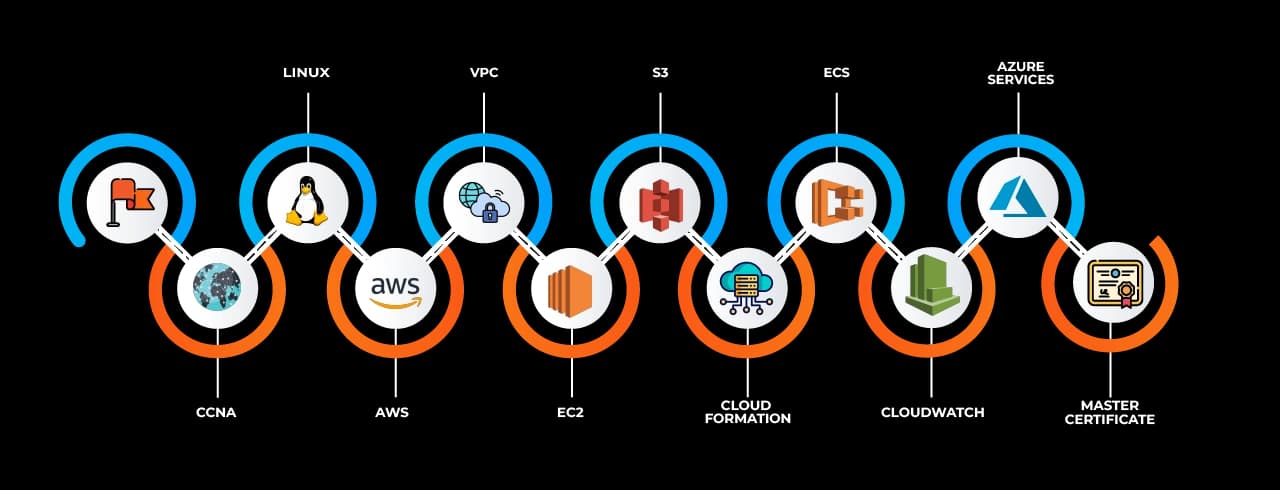
- Get comfortable with Linux terminal text. Just about every single remote server on earth runs on some version of Linux anyway, so you have to get completely used to hopping between directories, messing with text configuration files, and changing administrative permissions by typing quick commands instead of clicking icons with a mouse.
- Get a solid grip on basic internet networking. There is no way you can even attempt to secure or build a remote network architecture if you don't actually understand how data chunks travel from point A to point B across the internet, so you need to look into things like basic IP settings, subnets, and routing maps before you ever touch a cloud dashboard.
- Pick a Primary Cloud Platform: You need to focus your initial energy on thoroughly mastering one major hyper-scaler network environment, like learning how to launch compute blocks and set up security identity rules inside AWS or Azure environments.
- Get Comfortable with Coding: There is absolutely no need for you to become a hardcore software programming genius, but you definitely need to learn basic automation scripting using simple Python commands to manage and spin up cloud resources on the fly.
- Learn to Manage Infrastructure via Code: Move completely away from manually clicking colored buttons on a web dashboard and start writing simple script templates to launch or tear down thousands of secure virtual machines automatically without doing manual work.
Adopting this highly practical learning strategy completely transforms your entry-level career search because it yanks you right out of the overcrowded pool of generic text applicants and hands you the exact hands-on baseline needed to secure a stable cloud systems associate role.
Cloud Computing Courses in Mumbai
Cloud computing courses in Mumbai are designed to help students and professionals understand modern cloud technologies, platforms, and services used across various industries. These courses typically cover essential concepts such as cloud architecture, virtualization, storage, networking, security, deployment models, and popular cloud platforms. Practical training can help learners develop hands-on skills and understand how cloud solutions are implemented in real-world business environments. By gaining knowledge of cloud computing, learners can prepare for roles such as cloud engineer, cloud administrator, DevOps professional, and cloud solutions specialist. Choosing the right cloud computing courses in Mumbai can therefore be a valuable step toward developing industry-relevant technical skills and building a career in the growing cloud technology sector.
How to Find the Best Cloud Computing Training in Mumbai?
So, as a student, if you are looking for a premium training program across the country, it can feel like actually searching for a needle in a haystack, wherein every single banner ad promises a guaranteed job, but it may or may not be true.
Most cheap online platforms just hand you old, recorded slideshow links and generic text quizzes that never show you how real company infrastructure breaks down under heavy production traffic. When you are deciding which cloud engineering course will actually give you a massive technical edge, you have to look for centers that prioritize live laboratory hours.
A genuinely helpful program should let you build and break complex network architectures on active servers while an expert instructor reviews your script errors in real time. If you want to stop watching boring theory clips and actually start launching live multi-tier architectures, checking out the premium tracks at SevenMentor Institute stands out as an excellent option.
They skip the outdated textbook definitions and focus entirely on live configurations, making them a widely recognized contender for the Best Cloud Computing Course in Mumbai. Choosing a practical lab setup like this ensures you spend your time picking up real, operational skills that regional corporate recruiters are actively looking for.
Why Choose SevenMentor Institute for Your Cloud Computing Training in Mumbai?
Most traditional training spaces still make the massive mistake of keeping students trapped inside isolated, local sandbox environments that never face real-world variables. This outdated style fails completely because it leaves you totally unprepared to manage actual network drops, sudden security credential errors, or hidden cost overruns when your configurations go live in front of business directors.
SevenMentor completely fixes this educational gap by offering completely interactive, live training laboratories where you build, stress-test, and secure active network pipelines right beside working professionals. We also listened closely to our recent student feedback and rolled out massive improvements to our training methodology, ensuring that absolute beginners get extra baseline weeks to master basic server configurations before touching complicated automation tools.
Choosing our institute means your profile gets direct visibility inside active regional tech networks. Our specialized support team works directly with you to ensure your project portfolio features advanced modules that showcase your versatility across parallel IT lines:
- DevOps Engineering Classes: This specific part of the educational track focuses entirely on mastering automated build pipelines, container spaces, and continuous delivery workflows so your code moves smoothly from a basic laptop straight to a live website.
- Certified AWS Training: Here, you learn the core architectural patterns needed to design highly stable, fault-tolerant network structures on the largest cloud infrastructure platform operating on the planet today.
- Azure Training Modules: This practical focus area dives straight into corporate-level data safety, identity access management, and the exact migration strategies needed to move old office servers safely onto the Microsoft cloud network.
How We Overhauled Our Cloud Course Strategy Based on Students' Reviews:
We choose to be completely open about the older feedback that students shared regarding our initial cloud tracks. Some early reviews pointed out that jumping straight into complicated container networking and nested cloud infrastructure templates felt incredibly scary for freshers who did not know basic command-line logic. Other learners mentioned that mentors sometimes rushed through log debugging steps without leaving enough room for independent keyboard practice. Instead of ignoring these comments, we used that raw feedback to systematically rebuild our entire program to offer the best possible cloud architecture certification track available.
We made these major changes based directly on what our students told us:
- Added Baseline Logic Weeks: You now get a full introductory phase covering basic Linux terminal text layouts and foundational scripting logic before you ever touch a live production cloud cluster or enterprise container build.
- Capped Classroom Batch Sizes: We completely stopped overcrowding our systems labs, so every single student gets dedicated one-on-one time with the instructor whenever their automated deployment script crashes.
- Live Error Simulation Rooms: We replaced boring multiple-choice quizzes with realistic challenge environments where you must find and patch active memory leaks, broken server configurations, and failing build pipelines, all by yourself.
What Specific Features Should You Look For in the Best Cloud Computing Classes in Mumbai?
When you start hunting around the web for a local institute, you have to look past those basic five-star internet ratings and copy-pasted marketing taglines. The smartest way to search is by actively checking if the trainers have real programming experience and confirming that the labs focus entirely on building fresh architectures from scratch. SevenMentor hits every single mark perfectly by combining live classroom setups with real-time error debugging. This practical approach gives you a massive advantage over student profiles who only watch old pre-recorded videos.
Investing your hours at SevenMentor opens up multiple alternative tech pathways if you want to diversify your engineering skills further:
- DevOps Automation Classes: Learn to connect continuous integration pipelines and manage container systems using Docker and Kubernetes structures.
- Python Developer Modules: Master fast data scripting and build backend automation apps completely from scratch.
- Data Science Training: Transition into high-paying predictive analysis, database warehousing, and data engineering tracks.
Enrolling in our professional tracks ensures you receive extensive placement backing right until you land your first corporate job role. So if you are looking for better jobs in IT hubs like Andheri East, Lower Parel, and Dadar, as well as Vashi.
Frequently Asked Questions
Q1: Do I need to be very good at coding or maths to be able to learn the Cloud Computing Classes in Mumbai at your institute?
Not at all, dear students, we at SevenMentor would like to build our entire class schedule to start right at the absolute beginning with basic Linux command-line text and simple networking rules. After this, we make sure every single student feels completely comfortable with basic infrastructure layouts before we ever show you how to set up complex multi-tier cloud servers or handle advanced database loops.
Q2: Can a student switch from offline classes to online batches mid-way through the course?
Yes, you can because we run multiple concurrent morning and evening slots across our networks. If your office shift changes unexpectedly or your daily local train commute from Thane or Kalyan becomes difficult, you can coordinate with your center manager at our Dadar facility to smoothly move into a live virtual classroom without breaking your training momentum.
Q3: Does SevenMentor charge any hidden fees once a student gets a job through the placement cell?
No, we keep our entire fee structure completely transparent right from your first day inside our training labs. The basic cloud computing package is clearly stated on your initial invoice, and our dedicated placement cell does not charge any hidden post-job commissions or percentage cuts from your salary once you clear your corporate selection rounds.
Q4: What happens if I get stuck while writing server templates or cloud routes during self-study at home?
You never have to worry about staring at a broken piece of code all alone because we have active digital student chat spaces. The moment a cloud instance configuration throws an exception, you can drop your broken file link or terminal error screenshot into the portal to get immediate help from online mentors and your Mumbai batchmates.
Q5: Do I actually get a real certificate after I finish building my final cloud setup project?
Definitely, it is sure that you get an official Cloud Computing certification the moment you finish your live capstone project, which is the final part of our practical training setup. Having this on your profile serves as real proof that you know how to navigate AWS and Azure environments, which is exactly what you need to get past those automated resume scanners used by big tech firms over in the Bandra-Kurla Complex (BKC).
Q6: What kind of real-world portfolio pieces will I actually build during my laboratory hours?
You can forget about copying static textbook assignments because that stuff never helps you clear real technical interviews. Instead, you will build live interactive systems like secure virtual private clouds (VPCs) with custom security groups, automated load balancers handling simulated traffic spikes, and serverless portfolio architectures that you can proudly present to corporate recruiters.
Q7: Can I attend a live trial session before making a final decision about my course registration?
We actually encourage you to sit in on our live running laboratory batches completely free of cost first. This lets you experience our practical hands-on teaching style firsthand and check out our cloud sandboxes before you ever have to sign any enrollment forms or pay any training fees at our center.
 Boost Your IT Career with Hands-On Cloud Computing Training by SevenMentor
 Stay Ahead in the Digital Era with Advanced Cloud Computing Skills
 Learn Cloud Deployment, Management, and Automation from Expert Trainers
 AWS SDKsSoftware development kits that allow developers to integrate AWS services into applications using various programming languages.
 CloudWatch A monitoring service that collects and analyzes logs, metrics, and events for AWS resources and applications.
 CloudTrail A service that records AWS API calls for governance, compliance, and operational auditing.
 IAM (Identity and Access Management) A security service for managing user access, permissions, and authentication in AWS.
 Cognito A service for adding authentication, authorization, and user management to web and mobile applications.
 Inspector An automated security assessment service that detects vulnerabilities in AWS workloads.
 Macie A data security service that uses AI to discover and protect sensitive data across AWS.
 CloudHSM A managed hardware security module for cryptographic key storage and encryption.
 CloudFormation An infrastructure-as-code service that automates the provisioning of AWS resources using templates.
 OpsWorks A configuration management service that automates deployments using Chef and Puppet.
 CodeDeploy A service that automates application deployments across AWS and on-premises environments.
 CodePipeline A CI/CD service that automates the build, test, and deployment processes for applications.
 Elastic BeanstalkA platform-as-a-service (PaaS) that simplifies application deployment and management.
 DynamoDB A fully managed NoSQL database service for high-speed and scalable applications.
 IaaS (Infrastructure as a Service)A cloud model that provides virtualized computing resources over the internet.
 PaaS (Platform as a Service)A cloud model offering development and deployment environments without managing infrastructure.
 SaaS (Software as a Service)A cloud model where software applications are delivered over the internet on a subscription basis.
 AWS Management ConsoleAn easy-to-use web-based console of AWS services and resources
 AWS CLI A command-line interface tool that automates various AWS-related processes through the execution of commands and scripts.
 S3 (Simple Storage Service)A flexible object storage service designed for secure data storage and retrieval.
 EBS (Elastic Block Store)A robust block storage service tailored for EC2 instances.
 RDS (Relational Database Service)A fully managed relational database service that supports various database engines.