Data Science Classes in Dadar

feature-iconData Science Course with Live Hands-On Projects Experience
feature-iconBuild a Strong Foundation in Data Science with Industry-Oriented Program.
feature-iconMaster Data science with Gen AI Tools and Techniques from SevenMentor

022-48904395

Start Today!

CONSULT WITH
OUR ADVISORS

  • Course & Curriculum Details
  • Flexible Learning Options
  • Affordable Learning
  • Enrollment Process
  • Career Guidance
  • Internship Opportunities
  • General Communication
  • Certification Benefits

Learning Curve for Data Science
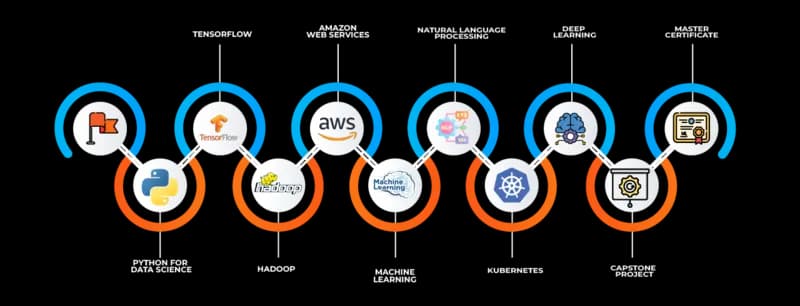
Learning curve for Data Science

Master In Data Science Course

OneCourseMultipleRoles

Empower your career with in-demand data skills and open doors to top-tier opportunities.

AI Engineer
Data Scientist
Machine Learning Engineer
Data Analyst
Deep Learning Engineer
Big Data Engineer
Business Intelligence Analyst
Computer Vision Engineer
NLP Engineer
Research Scientist (AI/ML)

Skills & Tools You'll Learn -

Data Visualization  iconData Visualization Learn to create compelling charts and graphs to uncover insights effectively.
Python  iconPython A versatile programming language widely used for data analysis and modeling.
SQL  iconSQL A database language for querying and managing structured data.
Pandas  iconPandas A Python library for data manipulation and analysis.
NumPy  iconNumPy A library for numerical computing and handling large datasets.
Scikit-learn iconScikit-learnA machine learning library for predictive modeling and analysis.
Deep Learning iconDeep LearningAn advanced subset of machine learning using neural networks.
Power Query & DAX iconPower Query & DAXTools for data transformation and advanced analytics in Power BI.
Model Evaluation & Optimization iconModel Evaluation & OptimizationStrategies to fine-tune machine learning models for better performance.
OpenCV iconOpenCVA library for computer vision tasks like image processing and object detection.
FastAPI iconFastAPIA high-performance framework for building APIs in machine learning and AI applications.
R iconRA statistical programming language widely used for data analysis and visualization.
Matplotlib & Seaborn iconMatplotlib & SeabornLibraries for creating insightful and visually appealing data visualizations.
Power BI & Tableau iconPower BI & TableauBusiness intelligence tools for interactive data visualization and reporting.
Data Preprocessing & Feature Engineering iconData Preprocessing & Feature EngineeringTechniques for preparing and optimizing data for modeling.
Statistical Modeling & Hypothesis Testing iconStatistical Modeling & Hypothesis TestingMethods for analyzing trends and validating assumptions.

Why Choose SevenMentor Data Science

Empowering Careers with Industry-Ready Skills.

Specialized Pocket Friendly Programs as per your requirements

Specialized Pocket Friendly Programs as per your requirements

Live Projects With Hands-on Experience

Live Projects With Hands-on Experience

Corporate Soft-skills & Personality Building Sessions

Corporate Soft-skills & Personality Building Sessions

Digital Online, Classroom, Hybrid Batches

Digital Online, Classroom, Hybrid Batches

Interview Calls Assistance & Mock Sessions

Interview Calls Assistance & Mock Sessions

1:1 Mentorship when required

1:1 Mentorship when required

Industry Experienced Trainers

Industry Experienced Trainers

Class Recordings for Missed Classes

Class Recordings for Missed Classes

1 Year FREE Repeat Option

1 Year FREE Repeat Option

Bonus Resources

Bonus Resources

Curriculum For Data Science

BATCH SCHEDULE

Data Science Course

Find Your Perfect Training Session

Dec 28 - Jan 3

2 sessions
28
Sun
Classroom/ Online
Weekend Batch
03
Sat
Classroom/ Online
Weekend Batch

Jan 4 - Jan 10

1 sessions
05
Mon
Classroom/ OnlineToday
Regular Batch

Jan 11 - Jan 17

1 sessions
12
Mon
Classroom/ Online
Regular Batch

Learning Comes Alive Through Hands-On PROJECTS!

Comprehensive Training Programs Designed to Elevate Your Career

Fake News Detection

Fake News Detection

Sales Forecasting Using Time Series Analysis(Data Science)

Sales Forecasting Using Time Series Analysis(Data Science)

Resume Screening System (Data Science)

Resume Screening System (Data Science)

Disease Prediction Using Patient Symptoms (Data Science)

Disease Prediction Using Patient Symptoms (Data Science)

Music Genre Classification(Data Science)

Music Genre Classification(Data Science)

No active project selected.

Transform Your Future with Elite Certification

Add Our Training Certificate In Your LinkedIn ProfileLinkedIn

Our industry-relevant certification equips you with essential skills required to succeed in a highly dynamic job market.

Join us and be part of over 50,000 successful certified graduates.

Student 1
Student 2
Student 3
Student 4
Student 5
Join 15,258 others learning today
Certificate Preview

KEY Features that Makes Us Better and Best FIT For You

Expert Trainers

Industry professionals with extensive experience to guide your learning journey.

Comprehensive Curriculum

In-depth courses designed to meet current industry standards and trends.

Hands-on Training

Real-world projects and practical sessions to enhance learning outcomes.

Flexible Schedules

Options for weekday, weekend, and online batches to suit your convenience.

Industry-Recognized Certifications

Globally accepted credentials to boost your career prospects.

State-of-the-Art Infrastructure

Modern facilities and tools for an engaging learning experience.

100% Placement Assistance

Dedicated support to help you secure your dream job.

Affordable Fees

Quality training at competitive prices with flexible payment options.

Lifetime Access to Learning Materials

Revisit course content anytime for continuous learning.

Personalized Attention

Small batch sizes for individualized mentoring and guidance.

Diverse Course Offerings

A wide range of programs in IT, business, design, and more.

Course Content

About Data Science Classes in Dadar

The field of Data Science has emerged as a pivotal force in reshaping industries, business models, and the global workforce. In a world increasingly driven by algorithms and data-backed decisions, understanding data science is no longer optional—it’s essential. Located in the heart of Mumbai, Dadar is evolving into a central hub for quality tech education. For aspirants looking to tap into this high-demand field, enrolling in SevenMentor Training offers a powerful springboard into the world of analytical intelligence, automation, and machine-based insights. With a strong educational infrastructure, expert-led training modules, and access to vibrant tech communities, Dadar is now home to some of the most well-regarded data science programs in the region.
 

Why Choose Dadar for Your Data Science Journey?

Strategically positioned and well-connected, Dadar has always been known for its educational legacy. As the digital skills gap widens across industries, institutions offering Data Science Training in Mumbai have evolved to meet these demands with precision and practicality. This location is not just about convenience; it's about immersion in a learning culture that values innovation, research, and practical exposure. The training centers here are equipped with modern labs, experienced trainers, and industry-aligned methodologies, giving learners a distinctive edge in their learning experience.

Unlike conventional learning environments, the ecosystem in Dadar blends academic rigor with industry realities. Many of the Data Science Classes in Dadar are curated by professionals with real-world experience, ensuring that learners gain not just theoretical knowledge but also practical wisdom applicable in business settings. With batch options for students, working professionals, and career changers, Dadar presents an inclusive and adaptive learning atmosphere that supports growth for everyone.
 

Rise of Specialized Learning Through Data Science Course in Dadar

As Data Science evolves into a specialized domain, so do the expectations of employers and the complexity of data environments. The Data Science Course in Bombay goes beyond foundational concepts to incorporate real-time application and business-driven decision-making processes. SevenMentor Training institute understand that organizations today are looking for individuals who can extract meaningful patterns from massive data sets and apply them in contexts such as marketing, finance, supply chain, and product development. Hence, the courses offered are not generic—they are designed with specialization tracks, real datasets, and tools used by leading tech companies.

Furthermore, Dadar-based training programs are aligned with modern-day business use cases. Whether it's churn prediction, recommendation systems, fraud detection, or sentiment analysis—students enrolled in Data Science Classes in Dadar are constantly challenged with solving industry problems. This result-oriented learning methodology develops problem-solving acumen and critical thinking, preparing learners for roles where adaptability and strategic execution are key.
 

A Training Hub for Tools and Technologies of the Future

The demand for tool-centric expertise is rising across the data analytics space. Leading Data Science Training in Dadar equips learners with exposure to a wide spectrum of tools used across global analytics functions. Learners are guided through practical implementations of tools such as Python, R, SQL, Spark, Tableau, Power BI, and cloud platforms like AWS and GCP. These aren't just add-ons—they form the core of the hands-on curriculum that defines the uniqueness of the training in Dadar.

Participants gain access to sandbox environments, real-time datasets, and mini-projects that test their coding, modeling, and visualization capabilities. This tool-centric training approach is one of the major differentiators of Data Science Classes in Dadar, giving learners a competitive advantage in interviews, freelance opportunities, and client-based consulting.
 

Industry Collaboration and Practice-Driven Modules

A hallmark of Data Science Course in Dadar is its close association with analytics firms, startups, and enterprise data teams. These collaborations allow training centers to align their content with the rapidly evolving needs of the industry. Trainers frequently conduct sessions based on live projects, business case simulations, and trending data problems. Institutes also host expert sessions, technical webinars, and analytics summits that offer students direct exposure to real-time corporate insights.

These interactive sessions help bridge the academic-corporate divide by helping learners understand the business context behind algorithms and analytics models. It encourages the development of end-to-end thinking—from data gathering to insight delivery. For learners, this translates into an experiential advantage that’s often lacking in standard certification programs.
 

Community-Driven Learning Ecosystem in Dadar

Another powerful aspect of Data Science Training in Dadar is the emergence of peer-led learning communities. These communities foster networking, collaboration, and long-term support for learners at every level. Through discussion forums, coding clubs, and study circles, students and professionals collaborate, solve problems, and co-create learning experiences. These initiatives go beyond the classroom and give learners access to collective intelligence, mentorship, and ongoing peer review.

Regularly organized competitions, mini-hackathons, and collaborative projects allow students to put their learning to the test in a dynamic and high-pressure setting. This exposure develops skills like teamwork, decision-making under uncertainty, and communication—qualities that are as essential as technical proficiency in real-world analytics roles.
 

Structured Mentorship and Doubt Resolution

One of the most appreciated features of Data Science Classes in Dadar is the structured mentorship framework that most institutions provide. With dedicated support systems, learners have access to doubt-solving sessions, personalized mentoring, and regular progress assessments. These frameworks ensure that no learner is left behind and that each one progresses at a comfortable but ambitious pace.

Trainers and mentors often come with hands-on experience in sectors like BFSI, e-commerce, telecom, and logistics, giving them the ability to share nuanced, industry-specific use cases. This real-world flavor makes learning deeper and more relatable. In some programs, mentorship also includes portfolio development guidance and interview preparation tips to help learners build their brand in the analytics job market.
 

Designed for Career Transformation and Upskilling

Although not focused on job roles directly, the Data Science Course in Dadar is built with the goal of helping learners grow professionally. Institutes provide resume clinics, LinkedIn audits, and mock interviews with analytics professionals to ensure learners are ready to face hiring processes. The emphasis is always on developing critical thinking, model interpretation, and presentation skills—attributes that give learners a real edge during evaluations and technical discussions.

For professionals already working in marketing, operations, or finance, the course acts as a catalyst to integrate data-driven thinking into their current roles. For students, it opens up new learning pathways in academia or research. And for entrepreneurs and consultants, the training enables sharper, more data-backed decision-making in their business strategies.
 

Flexible Learning Models to Suit Every Aspirant

Time is a critical factor for modern learners—and Data Science Training in Dadar acknowledges this. Institutes offer a range of scheduling options: weekday and weekend classes, online and hybrid formats, and even bootcamps for accelerated learning. This flexibility is particularly valuable for working professionals and students juggling internships or university work.

Institutes also provide recorded lectures, backup classes, and one-on-one mentoring slots for learners who might miss live sessions. These flexible formats ensure that learning remains uninterrupted and seamless across different life stages and professional commitments.
 

Certification and Global Credibility

Certifications offered through Data Science Classes in Dadar hold considerable industry value. They reflect a learner’s commitment to upskilling and practical capability. Most of these certifications are performance-based, assessed through quizzes, projects, and final capstone submissions—making them highly credible.

Additionally, many institutes offer guidance for learners aiming for global certifications from Microsoft, IBM, Google, or SAS. These external credentials can add more weight to the learner’s profile, particularly when applying to MNCs or international firms. The dual advantage of local training and global certification readiness makes Dadar-based training a smart choice for data science aspirants.
 

Return on Investment: A Smart, Affordable Choice

In contrast to expensive degrees and international programs, the Data Science Course in Dadar offers a cost-effective, high-impact learning path. Fee structures are often designed to be inclusive, with EMI options, scholarships, referral discounts, and group enrollment offers. These pricing models ensure that high-quality education remains accessible to a wider audience without financial barriers.

Given the high demand for data literacy and the rapid adoption of analytics in business, the returns—both financial and career-wise—are significantly high. Whether learners want to transition to analytics, freelance, or add value in their current roles, the Dadar training ecosystem offers a smart route toward those goals.
 

Alumni Impact and Local Influence

Graduates of Data Science Classes in Dadar have gone on to make notable contributions in various sectors. From working with top MNCs to launching their own data startups or analytics consultancies, these success stories reflect the depth and impact of training delivered in this region. Alumni frequently engage with current learners, creating a virtuous cycle of mentorship, referral, and career guidance.

The local influence of this growing alumni network also ensures that the Dadar data science community remains active and influential in shaping Mumbai’s broader tech and analytics landscape. It’s not just about personal growth—it’s about being part of a growing movement toward data empowerment.
 

Online Data Science Course in Dadar

To meet the needs of today’s dynamic learners, many institutions now offer a full-fledged online Data Science Course in Dadar. These virtual programs maintain the rigor and interactivity of classroom training while offering the flexibility of remote learning. With features like live coding sessions, screen sharing, doubt-clearing chats, discussion groups, and downloadable resources, learners can engage deeply without being physically present. Online batches also attract learners from other cities and states, allowing the Dadar-based expertise to reach a national audience. The online format maintains trainer access, project submission, and certification standards, making it ideal for professionals and students alike.
 

Corporate Data Science Training in Dadar 

Enterprises increasingly require internal teams to be skilled in data-driven decision-making. Recognizing this, training centers now offer dedicated corporate Data Science Training in Dadar tailored to organizational goals. These programs are conducted onsite or virtually and are structured around the company’s use cases, existing data systems, and sector-specific challenges. Whether it's predictive modeling in logistics, customer analytics in retail, or fraud detection in banking—corporate batches help teams adopt data-first thinking across verticals. Additionally, such training enables cross-functional collaboration and upskills diverse departments in analytics, making the organization more resilient and competitive in a data-centric economy.

Frequently Asked Questions

Everything you need to know about our revolutionary job platform

1

Why is Data Science important?

Ans:
Data Science holds a significant place for several reasons: Better Decision Making: Analyzing data allows organizations to make informed, data-backed decisions instead of just relying on instinct or previous experiences. Business Growth: Data Science enables businesses to understand customer behavior, market movements, and operational performance, leading to better services, satisfied customers, and higher profits. Forecasting Trends: With predictive modeling, organizations can anticipate future demands, understand customer needs, and prevent potential risks. Customization: Data-driven insights allow companies to customize their marketing strategies and product recommendations to match individual customer preferences. Driving Innovation: Data Science plays a key role in innovation by optimizing workflows, discovering new possibilities, and identifying areas for enhancement. Scientific Progress: In areas like medical research, environmental science, and social studies, Data Science helps in analyzing huge datasets to make groundbreaking findings.
2

What is Data Science?

Ans:
Data Science is a multidisciplinary field that combines various techniques from statistics, maths, computer science, and industry expertise to extract useful information from data. The main goal of data science is to gather, process, study, and interpret large sets of data to discover hidden trends, patterns, and correlations. These insights help organizations and businesses to make better decisions. By using advanced algorithms and tools, data scientists can recognize valuable information that helps in improving efficiency, optimizing operations, and finding new growth opportunities.
3

Why is Data Science essential for the future?

Ans:
Data Science has gained immense significance in the past years due to the explosion of data generated from sources like social media, online shopping, and IoT devices. This massive data can be used to refine decision-making, enhance efficiency, and develop new services. Some key ways Data Science is shaping the future include- Predictive Models: Data Science builds models that forecast future events based on past data. This is used in sales predictions, fraud detection, and risk management. Machine Learning Applications: It enables machines to learn from data and make decisions without specific programming. This is useful in areas like voice recognition, natural language processing, and image detection. Data Visualization: Complex data can be turned into visual formats that make it easier to understand trends, spot patterns, and present information to stakeholders.
4

What skills are needed for Data Science?

Ans:
To become a successful data scientist, one must master a variety of skills. Some key skills required are: Programming Proficiency: Knowledge of languages like Python, R, or SQL is necessary for data analysis, manipulation, and visualization. Data Cleaning & Preprocessing: The ability to refine and structure unprocessed data to make it useful for analysis. Mathematics & Statistics: A strong grasp of statistics, probability, linear algebra, and calculus is important for effective data modeling. Machine Learning Expertise: Familiarity with classification, regression, clustering, and recommendation algorithms is crucial. Data Visualization: Being able to present insights clearly using tools like Tableau, Power BI, or libraries such as Matplotlib. Industry Knowledge: Understanding the field where data science is applied, like finance, healthcare, or manufacturing, improves the quality of insights. Collaboration Skills: Since data science often involves working in teams with engineers, analysts, and business stakeholders, teamwork is an important skill.
5

Which Programming Languages Are Required for Data Science?

Ans:
Programming plays a crucial role in data science as it helps in handling, analyzing, and interpreting large datasets. By using different programming languages and tools, data scientists can extract meaningful insights, make informed decisions, and solve challenging problems based on data. Some of the essential programming languages and skills for data science include: Python: One of the most widely used languages in data science due to its simplicity, flexibility, and a rich set of libraries. Libraries like NumPy, Pandas, Matplotlib, and Scikit-Learn make it easier to work with data, visualize patterns, and implement machine learning models. R: A programming language designed mainly for statistical analysis and data visualization. It provides a variety of statistical techniques and graphical tools, making it useful for research, reporting, and data analysis tasks. SQL: Structured Query Language (SQL) is essential for working with relational databases. Data scientists use SQL to query, retrieve, and manipulate data efficiently from large datasets stored in databases. Top Programming Languages for Data Science The most preferred languages for data science are Python and R due to their extensive capabilities. Python is a general-purpose language that is easy to learn and comes with a variety of libraries, including NumPy, Pandas, and SciPy. On the other hand, R is a statistical computing language with a vast collection of packages specifically designed for data analysis, visualization, and modeling. Other programming languages that are sometimes used in data science include Julia, SAS, and MATLAB. Julia is a high-performance language optimized for numerical computing. SAS is widely used in business analytics for handling large-scale statistical operations. MATLAB is known for its efficiency in numerical computing, especially in areas like signal and image processing. The choice of programming language in data science depends on the nature of the task. While Python and R are the most commonly used for general data science applications, Julia, SAS, and MATLAB serve specialized purposes.
6

Why Is Python Popular in Data Science?

Ans:
Python is an extremely versatile language that can be used for building different types of applications. It is widely favored in data science due to its straightforward syntax, ease of learning, and ability to work across different platforms. As an open-source language, Python has a vast and active developer community. It is a great choice for beginners due to its readable code structure and extensive learning resources. Additionally, its scalability and efficiency make it a preferred tool for professional data scientists. With strong industry adoption, Python remains a top choice for students and professionals entering the data science field. Importance of Data Science in Python Python is a widely used programming language in data science due to its flexibility, rich library ecosystem, and strong community support. Below are some key reasons why Python plays a crucial role in data science: Data Cleaning and Manipulation: Python provides powerful libraries such as NumPy and Pandas, which simplify data cleaning and manipulation tasks. These libraries allow users to handle large datasets efficiently by sorting, filtering, grouping, and restructuring data. Data Visualization: With libraries like Matplotlib, Seaborn, and Plotly, Python makes it easy to create engaging and interactive visualizations. These tools help data scientists interpret patterns, trends, and insights from data effectively. Machine Learning and AI: Python has an extensive collection of machine learning and artificial intelligence libraries, including TensorFlow, Scikit-learn, and PyTorch. These libraries provide advanced tools for building, training, and deploying predictive models, making data-driven decision-making easier. Natural Language Processing (NLP): Python is widely adopted for NLP tasks like text classification, sentiment analysis, and named entity recognition. Libraries such as NLTK and spaCy simplify text processing, enabling efficient analysis of unstructured data. Data Integration & Connectivity: Python supports seamless integration with different data sources, including SQL and NoSQL databases, APIs, and cloud storage platforms. This flexibility allows data scientists to aggregate and analyze information from multiple sources effortlessly. Python for Data Science and Machine Learning Python is a general-purpose, high-level programming language that has gained immense popularity in the fields of data science and machine learning. Its simplicity, versatility, and comprehensive libraries make it a preferred choice for professionals in these areas. Simplicity: Python’s clear and concise syntax makes it easy to learn, making it accessible to both beginners and experienced programmers. This allows data scientists to focus on solving analytical problems without being overwhelmed by complex code. Versatility: Python is not limited to a specific task—it can be used for data preprocessing, model development, and deployment. This makes it a valuable tool for handling diverse data science and machine learning projects. Extensive Library Support: Python’s rich ecosystem of libraries and frameworks makes it a powerful tool for data science. Libraries such as NumPy, Pandas, Scikit-learn, and TensorFlow provide a broad range of functionalities, from data visualization and manipulation to machine learning model development. Importance of R Programming in Data Science R programming plays a vital role in data science due to its specialized statistical capabilities and powerful data visualization features. Here’s why R is significant in this field: Open-Source & Community Support: Being an open-source language, R is freely available and supported by a vast community of users and developers. This collaborative environment continuously enhances R’s functionality, ensuring its relevance in evolving data science challenges. Comprehensive Statistical Analysis: R provides an extensive set of statistical and data analysis functions, making it a go-to tool for statisticians. It supports various techniques, including regression analysis, clustering, time-series forecasting, and hypothesis testing. Data Visualization Capabilities: R excels in data visualization with libraries like ggplot2, which is widely used for generating high-quality graphs and charts. These visual tools help in creating compelling data presentations and reports. Seamless Integration with Other Tools: R easily integrates with other programming languages such as Python, Java, and C++, allowing data scientists to leverage multiple tools for complex analysis. Machine Learning & AI: With specialized packages for machine learning and artificial intelligence, R supports predictive modeling, natural language processing, and data-driven decision-making in various industries. Essential Database Skills for Data Science SQL for Data Retrieval: Proficiency in SQL is fundamental for data science professionals. It is essential to know how to write optimized SQL queries for retrieving, filtering, aggregating, and joining data from relational databases. Understanding query execution plans is also crucial for improving performance. Database Design & Modeling: Database knowledge extends beyond just querying tables—it includes understanding entity-relationship (ER) diagrams, schema design, and data validation constraints. A well-structured database schema ensures efficient data storage and retrieval for analytical tasks.
7

What is Data Cleaning and Transformation?

Ans:
Data cleaning and transformation are essential steps for any data scientist to ensure raw data is in the proper format for analysis. It’s crucial to have skills in extracting data from multiple sources, converting it into the correct format, and then loading it into a database. Mastery of ETL tools, scripting languages like Python or R, and data transformation techniques is necessary for success in data science.
8

What is Database Optimization?

Ans:
Database optimization involves using various techniques to enhance database performance, such as creating indexes, denormalizing the structure, and leveraging caching mechanisms. Indexes, in particular, play a significant role in speeding up data retrieval. By adding indexes, the database engine can locate data more efficiently, leading to faster query responses.
9

How to Ensure Data Integrity and Quality?

Ans:
Maintaining data integrity is key to ensuring the accuracy and reliability of data. Various constraints, including unique, not null, and check constraints, are applied to prevent data errors. Additionally, using transactions ensures that multiple operations are handled as one, preventing partial updates and ensuring consistency.
10

Why is Integration with Tools and Languages Important for Data Scientists?

Ans:
To be successful, a data scientist must understand how to connect to databases and analyze data using programming languages like Python. Mastery of tools such as Python's pandas, R, and visualization libraries allows for effective data analysis and comprehensive presentation of findings. These tools enhance a data scientist's ability to draw meaningful insights from data.
11

What is Database Management and Storage in Data Science?

Ans:
In data science, managing and storing data is essential, especially when handling large datasets. Key components of this process include: Data Storage: Relational Databases like MySQL, PostgreSQL, and SQL Server are typically used for storing structured data. NoSQL Databases like MongoDB and Cassandra are ideal for handling unstructured or semi-structured data. Data Warehouses like Amazon Redshift and Google BigQuery are optimized for reporting and analytics tasks. Data Management: Data Cleaning ensures raw data is transformed into useful formats, involving tasks such as handling missing values and detecting outliers.
12

What Are the Key Tools for Database Management and Storage in Data Science?

Ans:
Two of the most important tools for managing and storing data in data science are MySQL and Hadoop. MySQL is a relational database management system that allows users to store, organize, and retrieve data efficiently. It is widely used for handling large datasets and is essential for data science tasks. Hadoop is a distributed computing framework ideal for processing and analyzing large datasets across multiple machines. It helps businesses and organizations handle vast amounts of data, enabling effective data management and insight extraction at scale.
13

How is Data Science Different from Data Analysis?

Ans:
Data science involves a wider range of activities than data analysis. It covers tasks such as collecting, organizing, cleaning, and interpreting data, in addition to developing and deploying machine learning models. These models can be used across many applications. Data analysis, however, is a more focused activity that revolves around exploring and visualizing data to identify trends and patterns that can assist with decision-making. While data analysis is an integral part of data science, it represents just one facet of the broader discipline.
14

Best Institute for Data Science in Pune?

Ans:
SevenMentor Institute is recognized as one of the top Data Science Training Institutes in Pune for the following reasons: The course offers a detailed overview of the entire Data Science Lifecycle, ensuring a well-rounded understanding of all aspects within the field. You will gain proficiency in analytics with Python and MySQL, equipping you with essential skills and knowledge to thrive in the industry. The Data Science course fees in Pune are competitive, providing great value for money and a solid investment in your career. In addition to the course, SevenMentor Institute offers webinars and more than 20 assignments, all designed to help you become job-ready.
15

Is This Course Suitable for Beginners?

Ans:
Yes, this course is designed with beginners in mind. SevenMentor Institute is recognized as one of the top Data Science Institutes in Pune, and it starts by teaching the fundamentals of mathematics and statistics. Students will also learn Python, the most commonly used programming language for data science.
16

What Are the Prerequisites for Enrolling in a Data Science Course?

Ans:
To enroll in this data science course, it is helpful to have a basic understanding of: Mathematics, including probability, statistics, algebra, and calculus. Object-oriented programming languages such as Java, C, or Python. Familiarity with data manipulation tools like SQL and Excel can also be an advantage. Good problem-solving and critical thinking skills are also recommended.
17

What Does the Curriculum of the Data Science Course Cover?

Ans:
The data science curriculum is designed to equip students with the skills needed to analyze and interpret large, complex datasets. The program usually includes: In-depth training in Python and other programming languages for data manipulation. Topics like data visualization, statistical analysis, machine learning, deep learning, and real-world projects that provide hands-on experience. By the course’s end, students are prepared to tackle complex data analysis challenges and make data-driven decisions.
18

What Programming Tools & Languages Are Covered?

Ans:
Data science involves several tools and languages that are essential for analyzing and interpreting data. Key tools include: Python and R: Both are widely used for their versatility and rich libraries in data analysis and manipulation. Visualization tools like Tableau and Power BI: These are used to create visual insights from data. SQL: A crucial tool for querying and retrieving data from databases. Machine learning libraries: These are used to build predictive models. These tools are necessary for data scientists to gather, manipulate, and derive meaningful insights from data.
19

Who Can Benefit from a Data Science Course?

Ans:
Anyone interested in working with data to extract valuable insights can benefit from this course, including: Students aiming for a career in data science. Working professionals from diverse fields such as IT, finance, healthcare, and more. Individuals considering a career change to data-related roles.
20

What Are the Job Prospects After Completing a Data Science Course?

Ans:
Data Science is a rapidly growing industry, and there is a high demand for skilled professionals. After completing the course, graduates can apply for roles such as: Data Analyst Data Scientist Machine Learning Engineer Business Intelligence Analyst And more, across various industries.
21

Can I Enroll in This Course After Completing My Degree?

Ans:
Yes, you can enroll in a data science program after completing your degree. SevenMentor Institute offers a program that provides hands-on experience through real industry projects, making it a great opportunity for recent graduates.
22

What Is the Expected Salary for a Fresher or Experienced Data Scientist in India?

Ans:
A fresher in Data Science can expect to earn an average salary of INR 5,00,000 annually. With experience, a Data Scientist can earn up to INR 6,00,000 or more, depending on their skills and job role.

Explore Other Demanding Courses

No courses available for the selected domain.