Data Science Course in Pune with Placement Support

feature-iconData Science Course with Live Hands-On Projects Experience
feature-iconBuild a Strong Foundation in Data Science with Industry-Oriented Program.
feature-iconMaster Data science with Gen AI Tools and Techniques from SevenMentor

020-71173071

Start Today!

CONSULT WITH
OUR ADVISORS

  • Course & Curriculum Details
  • Flexible Learning Options
  • Affordable Learning
  • Enrollment Process
  • Career Guidance
  • Internship Opportunities
  • General Communication
  • Certification Benefits

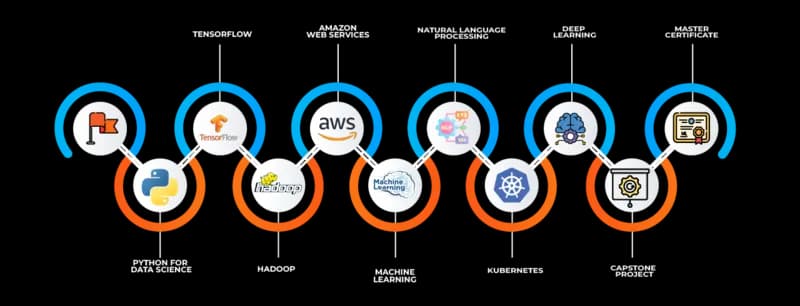
Learning Curve for Data Science

Learning curve for Data Science

Master In Data Science Course

OneCourseMultipleRoles

Empower your career with in-demand data skills and open doors to top-tier opportunities.

AI Engineer
Data Scientist
Machine Learning Engineer
Data Analyst
Deep Learning Engineer
Big Data Engineer
Business Intelligence Analyst
Computer Vision Engineer
NLP Engineer
Research Scientist (AI/ML)

Skills & Tools You'll Learn -

Data Visualization  iconData Visualization Learn to create compelling charts and graphs to uncover insights effectively.
Python  iconPython A versatile programming language widely used for data analysis and modeling.
SQL  iconSQL A database language for querying and managing structured data.
Pandas  iconPandas A Python library for data manipulation and analysis.
NumPy  iconNumPy A library for numerical computing and handling large datasets.
Scikit-learn iconScikit-learnA machine learning library for predictive modeling and analysis.
Deep Learning iconDeep LearningAn advanced subset of machine learning using neural networks.
Power Query & DAX iconPower Query & DAXTools for data transformation and advanced analytics in Power BI.
Model Evaluation & Optimization iconModel Evaluation & OptimizationStrategies to fine-tune machine learning models for better performance.
OpenCV iconOpenCVA library for computer vision tasks like image processing and object detection.
FastAPI iconFastAPIA high-performance framework for building APIs in machine learning and AI applications.
R iconRA statistical programming language widely used for data analysis and visualization.
Matplotlib & Seaborn iconMatplotlib & SeabornLibraries for creating insightful and visually appealing data visualizations.
Power BI & Tableau iconPower BI & TableauBusiness intelligence tools for interactive data visualization and reporting.
Data Preprocessing & Feature Engineering iconData Preprocessing & Feature EngineeringTechniques for preparing and optimizing data for modeling.
Statistical Modeling & Hypothesis Testing iconStatistical Modeling & Hypothesis TestingMethods for analyzing trends and validating assumptions.

Why Choose SevenMentor Data Science

Empowering Careers with Industry-Ready Skills.

Specialized Pocket Friendly Programs as per your requirements

Specialized Pocket Friendly Programs as per your requirements

Live Projects With Hands-on Experience

Live Projects With Hands-on Experience

Corporate Soft-skills & Personality Building Sessions

Corporate Soft-skills & Personality Building Sessions

Digital Online, Classroom, Hybrid Batches

Digital Online, Classroom, Hybrid Batches

Interview Calls Assistance & Mock Sessions

Interview Calls Assistance & Mock Sessions

1:1 Mentorship when required

1:1 Mentorship when required

Industry Experienced Trainers

Industry Experienced Trainers

Class Recordings for Missed Classes

Class Recordings for Missed Classes

1 Year FREE Repeat Option

1 Year FREE Repeat Option

Bonus Resources

Bonus Resources

Curriculum For Data Science

BATCH SCHEDULE

Data Science Course

Find Your Perfect Training Session

Dec 28 - Jan 3

2 sessions
28
Sun
Classroom/ Online
Weekend Batch
03
Sat
Classroom/ Online
Weekend Batch

Jan 4 - Jan 10

1 sessions
05
Mon
Classroom/ Online
Regular Batch

Jan 11 - Jan 17

1 sessions
12
Mon
Classroom/ Online
Regular Batch

Learning Comes Alive Through Hands-On PROJECTS!

Comprehensive Training Programs Designed to Elevate Your Career

Fake News Detection

Fake News Detection

Sales Forecasting Using Time Series Analysis(Data Science)

Sales Forecasting Using Time Series Analysis(Data Science)

Resume Screening System (Data Science)

Resume Screening System (Data Science)

Disease Prediction Using Patient Symptoms (Data Science)

Disease Prediction Using Patient Symptoms (Data Science)

Music Genre Classification(Data Science)

Music Genre Classification(Data Science)

No active project selected.

Transform Your Future with Elite Certification

Add Our Training Certificate In Your LinkedIn ProfileLinkedIn

Our industry-relevant certification equips you with essential skills required to succeed in a highly dynamic job market.

Join us and be part of over 50,000 successful certified graduates.

Student 1
Student 2
Student 3
Student 4
Student 5
Join 15,258 others learning today
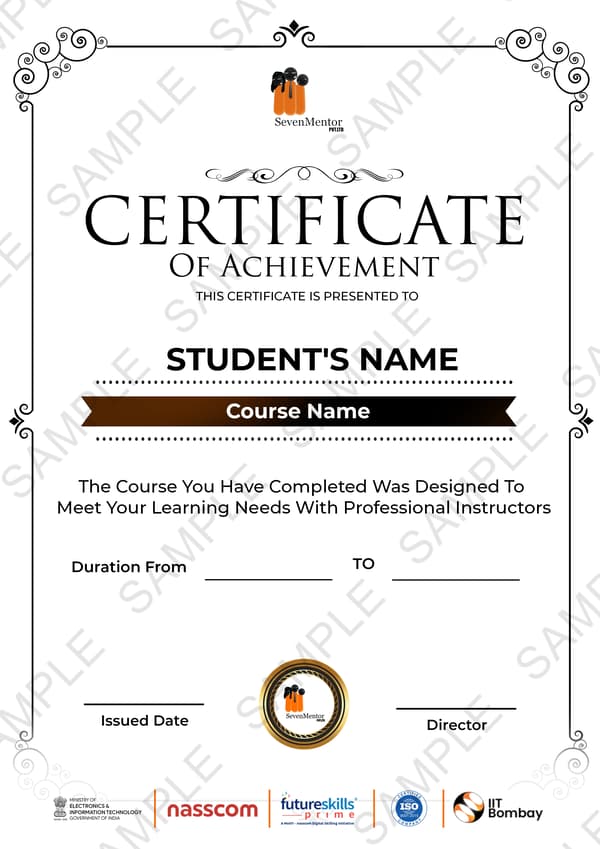
Certificate Preview

KEY Features that Makes Us Better and Best FIT For You

Expert Trainers

Industry professionals with extensive experience to guide your learning journey.

Comprehensive Curriculum

In-depth courses designed to meet current industry standards and trends.

Hands-on Training

Real-world projects and practical sessions to enhance learning outcomes.

Flexible Schedules

Options for weekday, weekend, and online batches to suit your convenience.

Industry-Recognized Certifications

Globally accepted credentials to boost your career prospects.

State-of-the-Art Infrastructure

Modern facilities and tools for an engaging learning experience.

100% Placement Assistance

Dedicated support to help you secure your dream job.

Affordable Fees

Quality training at competitive prices with flexible payment options.

Lifetime Access to Learning Materials

Revisit course content anytime for continuous learning.

Personalized Attention

Small batch sizes for individualized mentoring and guidance.

Diverse Course Offerings

A wide range of programs in IT, business, design, and more.

Course Content

About the Data Science Course

Let’s be honest—"Data Science" sounds like one of those tech buzzwords that everyone throws around but very few people can explain without diving into a storm of jargon. So here’s a simpler way to look at it: Data Science is just the art of turning raw, messy information into useful insights that can help people or businesses make better decisions. It’s like being a digital detective who uses numbers instead of a magnifying glass.

At its heart, data science is a mix of statistics, computer programming, machine learning, and a whole lot of problem-solving. Think of it like a cooking recipe. You start with your raw ingredients (a.k.a. tons of unfiltered data), then apply some chopping and cleaning (data preprocessing), mix in some mathematical spices (statistics), simmer it with some Python or R code, and finally—serve it as an insight or prediction that actually solves a real-world problem.

Still feels too abstract? Okay, here’s a fun example. Ever wondered how Netflix magically knows what show you’ll binge-watch next, even before you’ve decided? That’s data science at work. Behind the scenes, algorithms are analyzing your watch history, comparing it with other users, looking at trends, peak hours, and even the kind of device you’re watching on. Then—bam! It suggests that crime thriller you didn’t know you needed. Or take cricket, for instance. Ever heard commentators talk about a batsman’s strike rate against left-arm spinners in the death overs? Yep, someone crunched those numbers using data science. It's no longer just a gut feeling—it’s a calculated insight.

So whether it’s predicting whether your next food order will arrive on time, deciding which vaccine batch goes to which hospital, or helping a farmer know when to water the crops—data science is happening all around you. And the best part? You don’t need to be a genius to get started with it. You just need a curious mind and the patience to work with a lot of digital chaos.

In short, data science is the bridge between data and decisions, and it’s quickly becoming the language of the future. And once you start speaking it, you’ll see the world differently—maybe even in rows and columns!


Why is Pune a Great Place to Learn Data Science?

Pune is an excellent choice for learning something as fast-paced and trendy as Data Science. Pune has relatively quietly become one of India's best IT destination cities— the very young aspiring student population being equal to the number of start-ups, outstripping their usage, and the presence of big tech capitalizing the space. A Data Science Course in Pune is more than going to class; it's immersing yourself in a technology-forward city that oozes opportunity and lines of IIOT technology access around almost every corner, not to mention new start-ups reskilling the data-dependent space, from the sprawling techno parks in Hinjewadi to the data start-up incubators in Koregaon Park. The need for data employees in Pune—the need for job professionals with all the urgency, speed has escalated rapidly in the last 4-5 years. 


You’ll often find learners from all corners of India moving here for upskilling, and many of them land internships and placements right in the city, sometimes even before finishing their course. Whether it's companies working on AI for healthcare, building smart finance platforms, or even local teams using data to improve logistics, there’s no shortage of real-world projects where fresh talent is welcomed with open arms. What makes it better is Pune’s balanced lifestyle—while you’re crunching numbers and writing Python code during the day, you can unwind at local cafes or weekend treks that are just a bus ride away. So, if you’re someone looking to get trained in data science and actually see the impact of your learning unfold locally, enrolling in a Data Science Training in Pune might just be the smartest decision you make this year.


How Data Science Impacts the World Around Us?

Data Science Course is not just a course that teaches you how to code or build models; it is a field that quietly contributes to decision-making in healthcare, finance, entertainment, transportation, and literally almost every other industry you can dream up.


In healthcare, data science training is now being used to predict patient risks, personalize treatments, and even assist doctors in diagnosis through machine learning tools. Meanwhile, the finance industry uses it to detect fraud, assess creditworthiness, and give you those strangely accurate spending breakdowns in your banking apps. Ever wonder how your favorite food delivery app seems to know your weekend cravings? Or how your online shopping cart fills with “just what you needed” recommendations? That's data science-based customer enhancement—tracking preferences, understanding behavior, and suggesting things before you even search for them.


Even entertainment platforms like Netflix, YouTube, and Spotify rely heavily on data science to recommend what you’ll likely enjoy next. Your watch history, likes, and even the time you watch content get factored into those recommendations. It’s the reason why your feed doesn’t look like anyone else’s—because the system is learning you.


And this is not just all that there is, from informed agricultural practices to designing intelligent traffic networks, data science is transforming the use of data to make decisions, both large and small. Once you've mastered the data analysis and logic behind it through our comprehensive Data Science Classes in Pune, you will start seeing everything in the dataset differently. You will no longer just scan through your apps, and consume the news in a similar way; you will begin to see the patterns, the figures, and the intelligence that lies beneath.


So, yes, learning Data Science in Pune and getting a job is important, but it's not all there is to it. It's about being part of an ever-growing digital movement that is already transforming our world, in real, pragmatic, and often life-saving ways.


What Can You Learn From Data Science Training At SevenMentor?

  • The Data Science Course in Pune has been organized to provide a breadth of knowledge from beginners around data analysis to advanced machine learning, as well as AI-based applications in a structured manner that makes it easier for students to absorb the whole essence of data science. Our Data Science Coaching program combines theory and practical knowledge with an emphasis on guided industry-related use cases and projects so that students not only learn about topics like Python programming, statistical analysis, data visualization, and predictive modeling but also actually apply them through hands-on experience with live projects based on industry case studies. The Data Science Training has been designed for the fresher looking to enter the data industry; the upskilling working professional who knows that the industry is constantly evolving and is looking forward to acquiring the current trends and information; and the person seeking a career change. 
  • We have delivered the content and structure through seven modules that are aligned to the industry requirements at the time of enrollment; assignments are practical, and students are able to familiarize themselves with widely used data science tools such as Pandas, NumPy, Tableau, and SQL so they will be "job ready" once finished; and ultimately while everyone will have their own pace (there is structure to follow), students will feel like they have followed a step-by-step approach that brings them to being confident in evaluating a data set to collate and clean data using documentation; building a data model while using any statistical tools to measure quality; to finally building and presenting a machine learning model and knowing what a business problem it can be applied.


Why SevenMentor is chosen for the Best Data Science Course in Pune?

  1. Project-Based Learning Approach: At SevenMentor, instead of listening to just theory, students are building things, with real data science projects that mirror what actual professionals experience in companies. Thus, learning in the SevenMentor model was an experience instead of just classroom talk.


  1. Beginner-Friendly Curriculum: The overall Data Science Curriculum in Pune was built with individuals who might be completely new to the field. Starting with data structures explanations, to walking through the basic Python programming knowledge in a way that individuals coming from a non-technical background can feel comfortable and never overwhelmed.


  1. Industry Curated Modules: Each section of the Data Science Syllabus has been put together with relevant input from active practitioners in the real-world working environment. Therefore, when SevenMentor teaches machine learning models, it is what the companies working in the area are using today and not what was relevant from their learning five years previously.


  1. Experienced Mentors with Relevant Knowledge: You are not learning from just basic instructors - you are learning off experienced data science professionals that have played around with data visualization tools such as Power BI and Tableau in actual work-related scenarios. The knowledge that these mentors are sharing is practical and not just theoretical.


  1. Flexible Timing for Working Professionals: We know that several of our students will already have jobs and/or college classes. This is why we offer weekday and weekend Data Science batches to enable you to learn new skills while balancing your job/school schedule in the Pune tech ecosystem.


  1. Dedicated Career Support: It is not just about the learning Data Science Tools it is also about where to go next with these skills.  At SevenMentor, we offer resume workshopsmock interviews, and job placement support so that your data analyst job has the right start after completing the Data Science Certification.


  1. Exposure to Real Tools: We do not just mention tools and skills in theory; we ensure you are able to use the tools with the fullest intent.  From writing SQL queries to using big data frameworks, we prepare you to step into various Data Science job roles where technical fluency is required.


  1. Community and Collaboration: Through group projects, coding challenges, peer reviews, and student interaction in the SevenMentor community, our Data Analyst Programs investigate how to work together on data-driven decision making, just like in the real world after they enter the industry.


Don't Worry Even If You Are From a Non-IT Background:

Let’s be honest—hearing words like “algorithms” or “data pipelines” can make anyone without a tech degree feel like they’ve walked into a sci-fi film. But here’s the truth: Data Science isn’t reserved for coders or engineers. In fact, many of our most successful students at SevenMentor started off in completely different fields—marketing, HR, finance, and even teaching. Data Science coaching is kind of like picking up a new language or technique. At first, it feels clunky and confusing for newcomers. But once you understand the basics, things start to click right away. You don’t need to have written a single line of code before in order to excel in Data Science. Our Data Science Certificate in Pune takes you from scratch—yes, that means step-by-step help with tools like Python, Excel, and SQL—and slowly builds your confidence. One of our past learners was a BCom graduate who’s now working as a junior data analyst at an MNC job in Pune. What helped? Consistent practice, mentor guidance, and a belief that it's never too late to start something new. So if you're from a non-tech background, don't count yourself out—data science might just be the most unexpected but rewarding path you take.


Numerous Jobs Are Awaiting You After Upskilling

Once you’ve wrapped up the Data Science course at SevenMentor, you’re not just walking out with knowledge—you’re stepping into a field full of real career options. Whether it’s working as a Data Analyst, wrangling business insights from numbers, or stepping up as a Machine Learning Engineer building smart prediction systems, there’s something for everyone. And if you’re more into the bigger picture, becoming a full-fledged Data Scientist is absolutely within reach. What’s more exciting? Data Science jobs in Pune are booming, with tech hubs like Hinjewadi, Kharadi, and Magarpatta housing firms hungry for skilled talent. Companies like TCS, Accenture, and several nimble startups are constantly adding data professionals to their teams.

Many of our recent students graduate with zero prior coding experience. They land their first job as a Data Analyst just within months after finishing the Data Science Course in Pune. With consistent mentoring and our dedicated Data Science placement support, our students have built a strong portfolio and nailed some of the first interviews. That’s the kind of transformation we see regularly at SevenMentor Institute in Pune. Through our data science coaching, a well-paid Data Science Career in Pune is no longer just a dream, it’s a very achievable target.


Hurry Up, Join Fast, It Is Now Or Never:

If you're considering a career in Data Science, now is the time to join. Our subsequent batches will have limited seats available, and typically, the early enrollees in our hands-on Data Science coaching have the most learning and the best placement prep. Still unsure? No problem! We have a free demo session to introduce you to the teaching style, syllabus, and expectations. Our latest Data Science batches in Pune will commence shortly, and they are usually an oversold. Don't procrastinate! Join us to experience the foundations of a career at SevenMentor today!


Online Data Science Training

SevenMentor stands out as the premier choice for Online Data Science training in Pune. In an era marked by an exponential increase in data generation, the importance of Data Science has soared. It has seamlessly integrated into various sectors, from land management to business analytics and commerce, earning widespread recognition. Recognized as a global leader, SevenMentor Training Institute offers unparalleled Online Data Science Training in Pune, empowering candidates to secure promising career opportunities worldwide. Led by experienced instructors with extensive expertise in data science, our Online Data Science Class in Pune covers a spectrum of topics, from foundational concepts to advanced techniques. Through interactive online sessions, students receive personalized guidance, participate in real-life projects, and gain invaluable practical experience. By the end of our Online Data Science program, you'll possess the tools and techniques essential for data analysis, visualization, and interpretation. Equipped with practical experience and industry-relevant knowledge, you'll be ready to embark on a successful career journey in data science. Join us at the online Data Science Training in Pune and unlock your potential in this exciting field.


Corporate Data Science Course

SevenMentor Training Corporate Data Science training in Pune is an integrated Application in Data Science and Machine Learning designed for professionals pursuing a career in Analytics, Artificial Intelligence, Data Visualization, Statistics, and Data Science. Data Analyst, our personalized Data Science, and Machine Learning Training Courses in Pune are designed by Senior Data Scientists who have vast experience in the industry. Our Corporate Data Science training will help you achieve proficiency in data analysis, machine learning algorithms, trees, Regression Models, K-Means Clustering, deploying R computing, and connecting R with the Hadoop framework on case studies and real-world projects. These skills will allow professionals to prepare for the function of the Data Scientist and increase the revenue of your organization. Your employees must embrace modern data techniques so as to understand your most vital strategic initiatives. SevenMentor's Corporate Data Science Courses are designed and delivered by experienced Senior Data Scientists to try to do just that. With proven instructional excellence and outcomes, our Corporate Data Science classes will enable your teams to immediately implement what they learn, so they can do what matters most - tackle your most challenging business problems.

Frequently Asked Questions

Everything you need to know about our revolutionary job platform

1

Why is Data Science important?

Ans:
Data Science holds a significant place for several reasons: Better Decision Making: Analyzing data allows organizations to make informed, data-backed decisions instead of just relying on instinct or previous experiences. Business Growth: Data Science enables businesses to understand customer behavior, market movements, and operational performance, leading to better services, satisfied customers, and higher profits. Forecasting Trends: With predictive modeling, organizations can anticipate future demands, understand customer needs, and prevent potential risks. Customization: Data-driven insights allow companies to customize their marketing strategies and product recommendations to match individual customer preferences. Driving Innovation: Data Science plays a key role in innovation by optimizing workflows, discovering new possibilities, and identifying areas for enhancement. Scientific Progress: In areas like medical research, environmental science, and social studies, Data Science helps in analyzing huge datasets to make groundbreaking findings.
2

What is Data Science?

Ans:
Data Science is a multidisciplinary field that combines various techniques from statistics, maths, computer science, and industry expertise to extract useful information from data. The main goal of data science is to gather, process, study, and interpret large sets of data to discover hidden trends, patterns, and correlations. These insights help organizations and businesses to make better decisions. By using advanced algorithms and tools, data scientists can recognize valuable information that helps in improving efficiency, optimizing operations, and finding new growth opportunities.
3

Why is Data Science essential for the future?

Ans:
Data Science has gained immense significance in the past years due to the explosion of data generated from sources like social media, online shopping, and IoT devices. This massive data can be used to refine decision-making, enhance efficiency, and develop new services. Some key ways Data Science is shaping the future include- Predictive Models: Data Science builds models that forecast future events based on past data. This is used in sales predictions, fraud detection, and risk management. Machine Learning Applications: It enables machines to learn from data and make decisions without specific programming. This is useful in areas like voice recognition, natural language processing, and image detection. Data Visualization: Complex data can be turned into visual formats that make it easier to understand trends, spot patterns, and present information to stakeholders.
4

What skills are needed for Data Science?

Ans:
To become a successful data scientist, one must master a variety of skills. Some key skills required are: Programming Proficiency: Knowledge of languages like Python, R, or SQL is necessary for data analysis, manipulation, and visualization. Data Cleaning & Preprocessing: The ability to refine and structure unprocessed data to make it useful for analysis. Mathematics & Statistics: A strong grasp of statistics, probability, linear algebra, and calculus is important for effective data modeling. Machine Learning Expertise: Familiarity with classification, regression, clustering, and recommendation algorithms is crucial. Data Visualization: Being able to present insights clearly using tools like Tableau, Power BI, or libraries such as Matplotlib. Industry Knowledge: Understanding the field where data science is applied, like finance, healthcare, or manufacturing, improves the quality of insights. Collaboration Skills: Since data science often involves working in teams with engineers, analysts, and business stakeholders, teamwork is an important skill.
5

Which Programming Languages Are Required for Data Science?

Ans:
Programming plays a crucial role in data science as it helps in handling, analyzing, and interpreting large datasets. By using different programming languages and tools, data scientists can extract meaningful insights, make informed decisions, and solve challenging problems based on data. Some of the essential programming languages and skills for data science include: Python: One of the most widely used languages in data science due to its simplicity, flexibility, and a rich set of libraries. Libraries like NumPy, Pandas, Matplotlib, and Scikit-Learn make it easier to work with data, visualize patterns, and implement machine learning models. R: A programming language designed mainly for statistical analysis and data visualization. It provides a variety of statistical techniques and graphical tools, making it useful for research, reporting, and data analysis tasks. SQL: Structured Query Language (SQL) is essential for working with relational databases. Data scientists use SQL to query, retrieve, and manipulate data efficiently from large datasets stored in databases. Top Programming Languages for Data Science The most preferred languages for data science are Python and R due to their extensive capabilities. Python is a general-purpose language that is easy to learn and comes with a variety of libraries, including NumPy, Pandas, and SciPy. On the other hand, R is a statistical computing language with a vast collection of packages specifically designed for data analysis, visualization, and modeling. Other programming languages that are sometimes used in data science include Julia, SAS, and MATLAB. Julia is a high-performance language optimized for numerical computing. SAS is widely used in business analytics for handling large-scale statistical operations. MATLAB is known for its efficiency in numerical computing, especially in areas like signal and image processing. The choice of programming language in data science depends on the nature of the task. While Python and R are the most commonly used for general data science applications, Julia, SAS, and MATLAB serve specialized purposes.
6

Why Is Python Popular in Data Science?

Ans:
Python is an extremely versatile language that can be used for building different types of applications. It is widely favored in data science due to its straightforward syntax, ease of learning, and ability to work across different platforms. As an open-source language, Python has a vast and active developer community. It is a great choice for beginners due to its readable code structure and extensive learning resources. Additionally, its scalability and efficiency make it a preferred tool for professional data scientists. With strong industry adoption, Python remains a top choice for students and professionals entering the data science field. Importance of Data Science in Python Python is a widely used programming language in data science due to its flexibility, rich library ecosystem, and strong community support. Below are some key reasons why Python plays a crucial role in data science: Data Cleaning and Manipulation: Python provides powerful libraries such as NumPy and Pandas, which simplify data cleaning and manipulation tasks. These libraries allow users to handle large datasets efficiently by sorting, filtering, grouping, and restructuring data. Data Visualization: With libraries like Matplotlib, Seaborn, and Plotly, Python makes it easy to create engaging and interactive visualizations. These tools help data scientists interpret patterns, trends, and insights from data effectively. Machine Learning and AI: Python has an extensive collection of machine learning and artificial intelligence libraries, including TensorFlow, Scikit-learn, and PyTorch. These libraries provide advanced tools for building, training, and deploying predictive models, making data-driven decision-making easier. Natural Language Processing (NLP): Python is widely adopted for NLP tasks like text classification, sentiment analysis, and named entity recognition. Libraries such as NLTK and spaCy simplify text processing, enabling efficient analysis of unstructured data. Data Integration & Connectivity: Python supports seamless integration with different data sources, including SQL and NoSQL databases, APIs, and cloud storage platforms. This flexibility allows data scientists to aggregate and analyze information from multiple sources effortlessly. Python for Data Science and Machine Learning Python is a general-purpose, high-level programming language that has gained immense popularity in the fields of data science and machine learning. Its simplicity, versatility, and comprehensive libraries make it a preferred choice for professionals in these areas. Simplicity: Python’s clear and concise syntax makes it easy to learn, making it accessible to both beginners and experienced programmers. This allows data scientists to focus on solving analytical problems without being overwhelmed by complex code. Versatility: Python is not limited to a specific task—it can be used for data preprocessing, model development, and deployment. This makes it a valuable tool for handling diverse data science and machine learning projects. Extensive Library Support: Python’s rich ecosystem of libraries and frameworks makes it a powerful tool for data science. Libraries such as NumPy, Pandas, Scikit-learn, and TensorFlow provide a broad range of functionalities, from data visualization and manipulation to machine learning model development. Importance of R Programming in Data Science R programming plays a vital role in data science due to its specialized statistical capabilities and powerful data visualization features. Here’s why R is significant in this field: Open-Source & Community Support: Being an open-source language, R is freely available and supported by a vast community of users and developers. This collaborative environment continuously enhances R’s functionality, ensuring its relevance in evolving data science challenges. Comprehensive Statistical Analysis: R provides an extensive set of statistical and data analysis functions, making it a go-to tool for statisticians. It supports various techniques, including regression analysis, clustering, time-series forecasting, and hypothesis testing. Data Visualization Capabilities: R excels in data visualization with libraries like ggplot2, which is widely used for generating high-quality graphs and charts. These visual tools help in creating compelling data presentations and reports. Seamless Integration with Other Tools: R easily integrates with other programming languages such as Python, Java, and C++, allowing data scientists to leverage multiple tools for complex analysis. Machine Learning & AI: With specialized packages for machine learning and artificial intelligence, R supports predictive modeling, natural language processing, and data-driven decision-making in various industries. Essential Database Skills for Data Science SQL for Data Retrieval: Proficiency in SQL is fundamental for data science professionals. It is essential to know how to write optimized SQL queries for retrieving, filtering, aggregating, and joining data from relational databases. Understanding query execution plans is also crucial for improving performance. Database Design & Modeling: Database knowledge extends beyond just querying tables—it includes understanding entity-relationship (ER) diagrams, schema design, and data validation constraints. A well-structured database schema ensures efficient data storage and retrieval for analytical tasks.
7

What is Data Cleaning and Transformation?

Ans:
Data cleaning and transformation are essential steps for any data scientist to ensure raw data is in the proper format for analysis. It’s crucial to have skills in extracting data from multiple sources, converting it into the correct format, and then loading it into a database. Mastery of ETL tools, scripting languages like Python or R, and data transformation techniques is necessary for success in data science.
8

What is Database Optimization?

Ans:
Database optimization involves using various techniques to enhance database performance, such as creating indexes, denormalizing the structure, and leveraging caching mechanisms. Indexes, in particular, play a significant role in speeding up data retrieval. By adding indexes, the database engine can locate data more efficiently, leading to faster query responses.
9

How to Ensure Data Integrity and Quality?

Ans:
Maintaining data integrity is key to ensuring the accuracy and reliability of data. Various constraints, including unique, not null, and check constraints, are applied to prevent data errors. Additionally, using transactions ensures that multiple operations are handled as one, preventing partial updates and ensuring consistency.
10

Why is Integration with Tools and Languages Important for Data Scientists?

Ans:
To be successful, a data scientist must understand how to connect to databases and analyze data using programming languages like Python. Mastery of tools such as Python's pandas, R, and visualization libraries allows for effective data analysis and comprehensive presentation of findings. These tools enhance a data scientist's ability to draw meaningful insights from data.
11

What is Database Management and Storage in Data Science?

Ans:
In data science, managing and storing data is essential, especially when handling large datasets. Key components of this process include: Data Storage: Relational Databases like MySQL, PostgreSQL, and SQL Server are typically used for storing structured data. NoSQL Databases like MongoDB and Cassandra are ideal for handling unstructured or semi-structured data. Data Warehouses like Amazon Redshift and Google BigQuery are optimized for reporting and analytics tasks. Data Management: Data Cleaning ensures raw data is transformed into useful formats, involving tasks such as handling missing values and detecting outliers.
12

What Are the Key Tools for Database Management and Storage in Data Science?

Ans:
Two of the most important tools for managing and storing data in data science are MySQL and Hadoop. MySQL is a relational database management system that allows users to store, organize, and retrieve data efficiently. It is widely used for handling large datasets and is essential for data science tasks. Hadoop is a distributed computing framework ideal for processing and analyzing large datasets across multiple machines. It helps businesses and organizations handle vast amounts of data, enabling effective data management and insight extraction at scale.
13

How is Data Science Different from Data Analysis?

Ans:
Data science involves a wider range of activities than data analysis. It covers tasks such as collecting, organizing, cleaning, and interpreting data, in addition to developing and deploying machine learning models. These models can be used across many applications. Data analysis, however, is a more focused activity that revolves around exploring and visualizing data to identify trends and patterns that can assist with decision-making. While data analysis is an integral part of data science, it represents just one facet of the broader discipline.
14

Best Institute for Data Science in Pune?

Ans:
SevenMentor Institute is recognized as one of the top Data Science Training Institutes in Pune for the following reasons: The course offers a detailed overview of the entire Data Science Lifecycle, ensuring a well-rounded understanding of all aspects within the field. You will gain proficiency in analytics with Python and MySQL, equipping you with essential skills and knowledge to thrive in the industry. The Data Science course fees in Pune are competitive, providing great value for money and a solid investment in your career. In addition to the course, SevenMentor Institute offers webinars and more than 20 assignments, all designed to help you become job-ready.
15

Is This Course Suitable for Beginners?

Ans:
Yes, this course is designed with beginners in mind. SevenMentor Institute is recognized as one of the top Data Science Institutes in Pune, and it starts by teaching the fundamentals of mathematics and statistics. Students will also learn Python, the most commonly used programming language for data science.
16

What Are the Prerequisites for Enrolling in a Data Science Course?

Ans:
To enroll in this data science course, it is helpful to have a basic understanding of: Mathematics, including probability, statistics, algebra, and calculus. Object-oriented programming languages such as Java, C, or Python. Familiarity with data manipulation tools like SQL and Excel can also be an advantage. Good problem-solving and critical thinking skills are also recommended.
17

What Does the Curriculum of the Data Science Course Cover?

Ans:
The data science curriculum is designed to equip students with the skills needed to analyze and interpret large, complex datasets. The program usually includes: In-depth training in Python and other programming languages for data manipulation. Topics like data visualization, statistical analysis, machine learning, deep learning, and real-world projects that provide hands-on experience. By the course’s end, students are prepared to tackle complex data analysis challenges and make data-driven decisions.
18

What Programming Tools & Languages Are Covered?

Ans:
Data science involves several tools and languages that are essential for analyzing and interpreting data. Key tools include: Python and R: Both are widely used for their versatility and rich libraries in data analysis and manipulation. Visualization tools like Tableau and Power BI: These are used to create visual insights from data. SQL: A crucial tool for querying and retrieving data from databases. Machine learning libraries: These are used to build predictive models. These tools are necessary for data scientists to gather, manipulate, and derive meaningful insights from data.
19

Who Can Benefit from a Data Science Course?

Ans:
Anyone interested in working with data to extract valuable insights can benefit from this course, including: Students aiming for a career in data science. Working professionals from diverse fields such as IT, finance, healthcare, and more. Individuals considering a career change to data-related roles.
20

What Are the Job Prospects After Completing a Data Science Course?

Ans:
Data Science is a rapidly growing industry, and there is a high demand for skilled professionals. After completing the course, graduates can apply for roles such as: Data Analyst Data Scientist Machine Learning Engineer Business Intelligence Analyst And more, across various industries.
21

Can I Enroll in This Course After Completing My Degree?

Ans:
Yes, you can enroll in a data science program after completing your degree. SevenMentor Institute offers a program that provides hands-on experience through real industry projects, making it a great opportunity for recent graduates.
22

What Is the Expected Salary for a Fresher or Experienced Data Scientist in India?

Ans:
A fresher in Data Science can expect to earn an average salary of INR 5,00,000 annually. With experience, a Data Scientist can earn up to INR 6,00,000 or more, depending on their skills and job role.

Explore Other Demanding Courses

No courses available for the selected domain.