Full Stack with Python Classes in Dubai
 Learn To Build Scalable Web Applications at SevenMentor Institute’s Full Stack Training
 Accelerate Your Career and Secure High-Paying Jobs After Industry-Relevant Certification
 Master Frontend, Backend, and Database Technologies for End-to-End Development
Start Today!
CONSULT WITHOUR ADVISORS
- Course & Curriculum Details
- Flexible Learning Options
- Affordable Learning
- Enrollment Process
- Career Guidance
- Internship Opportunities
- General Communication
- Certification Benefits
Learning Curve for Full Stack With Python
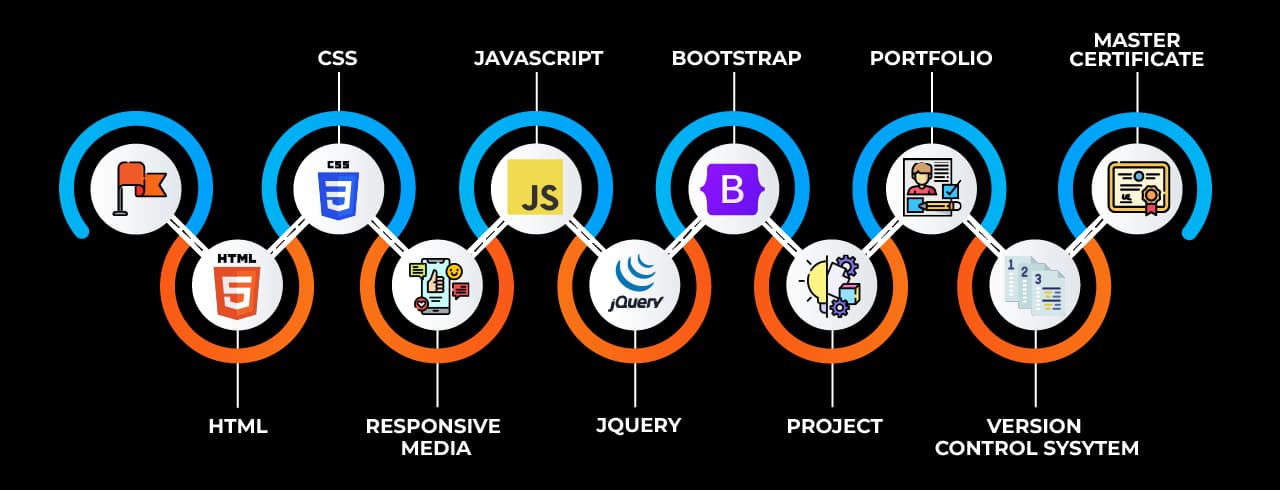
Master In Full Stack With Python Course
OneCourseMultipleRoles
Empower your career with in-demand data skills and open doors to top-tier opportunities.
Skills & Tools You'll Learn -
 HTML The core language for structuring web pages.
 React.jsDevelop dynamic and high-performance front-end applications using the React.js library
 JavaScript Add interactivity and dynamic behavior to web applications using JavaScript programming.
 CSS3Style and enhance web pages with CSS3, including responsive design, animations, and flexible layouts.
 Bootstrap Utilize Bootstrap to build mobile-first, responsive websites with pre-designed components and a grid system.
 React Router DOMManages navigation and routing in React applications for seamless page transitions.
 React BootstrapA combination of Bootstrap and React components for smoother UI integration.
 Tailwind CSSA utility-first CSS framework that simplifies styling with pre-defined classes.
 React-IconsA library that provides various scalable vector icons for React applications.
 NPM A package manager for installing and managing JavaScript libraries and dependencies.
 Body-ParserA middleware that parses incoming request bodies in Express applications.
 Cookie-ParserA middleware for handling and parsing cookies in Express applications.
 MiddlewareFunctions in Express that handle requests before reaching the main route logic.
 Axios A JavaScript library for making HTTP requests to fetch or send data from APIs.
 Fetch methodA built-in JavaScript method to retrieve data from APIs using HTTP requests.
 React HooksSpecial functions like useState and useEffect that enable state and lifecycle management in React.
 Websockets A protocol that enables real-time communication between the server and client.
 GraphQL A query language that allows fetching precise data from APIs, improving efficiency.
 Visual Studio Code A lightweight, feature-rich code editor widely used for web development.
 Google ChromeA popular web browser with developer tools for debugging and performance analysis.JavaScript A scripting language for adding interactivity and dynamic behavior to web pages.
 Node JSA runtime environment for server-side JavaScript execution.
 Express JSA lightweight framework for building Node.js web applications.
 MongoDB A NoSQL database used to store data in a flexible, JSON-like format.
Why Choose SevenMentor Full Stack With Python
Empowering Careers with Industry-Ready Skills.

Specialized Pocket Friendly Programs as per your requirements

Live Projects With Hands-on Experience

Corporate Soft-skills & Personality Building Sessions

Digital Online, Classroom, Hybrid Batches

Interview Calls Assistance & Mock Sessions

1:1 Mentorship when required

Industry Experienced Trainers

Class Recordings for Missed Classes

1 Year FREE Repeat Option

Bonus Resources
Specialized Pocket Friendly Programs as per your requirements
Live Projects With Hands-on Experience
Corporate Soft-skills & Personality Building Sessions
Digital Online, Classroom, Hybrid Batches
Interview Calls Assistance & Mock Sessions
1:1 Mentorship when required
Industry Experienced Trainers
Class Recordings for Missed Classes
1 Year FREE Repeat Option
Bonus Resources

Fastest 1:1 doubt support

Flexible EMI Plans

Adaptive LMS

Free Wifi Facilities

Flexible Scheduling

Ongoing Career Support

Placement Drives

GitHub Project Implementations

Real World Topics

5/5 rating for 99% doubt Solutions

Be Different With Master Certificate

Latest Market Technology & Practical Training

Resume Building Session & Job Portals Training

Enhanced Capstone Projects for learning

Stand Out with an impressive Certificate

Weekday and Weekend Batches

Workshops & Seminars with Industry Experts

Unlimited Interview Calls

AWS Cloud Project Deployments

Live Quizzes

Resolve doubts any time through chat, voice notes, calling or meeting with instructors.
Curriculum For Full Stack With Python
BATCH SCHEDULE
Full Stack With Python Course
Find Your Perfect Training Session
Jul 5 - Jul 11
1 sessionsJul 12 - Jul 18
3 sessionsLearning Comes Alive Through Hands-On PROJECTS!
Comprehensive Training Programs Designed to Elevate Your Career

Responsive Landing Page

Restaurant Menu Website

E-commerce Product Page
Personal Portfolio Website

Photography Gallery
No active project selected.
Transform Your Future with Elite Certification
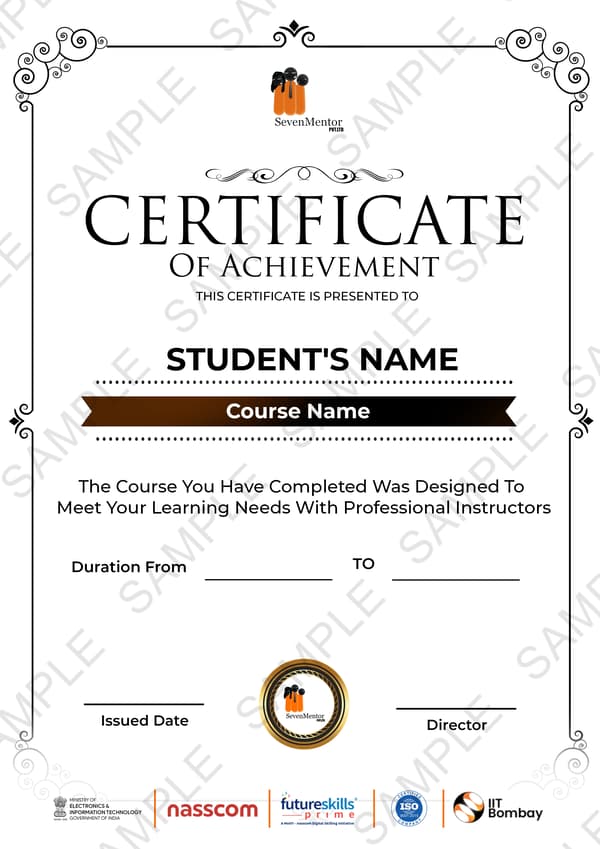
Add Our Training Certificate In Your LinkedIn Profile
Our industry-relevant certification equips you with essential skills required to succeed in a highly dynamic job market.
Join us and be part of over 50,000 successful certified graduates.


KEY Features that Makes Us Better and Best FIT For You
Expert Trainers
Industry professionals with extensive experience to guide your learning journey.
Comprehensive Curriculum
In-depth courses designed to meet current industry standards and trends.
Hands-on Training
Real-world projects and practical sessions to enhance learning outcomes.
Flexible Schedules
Options for weekday, weekend, and online batches to suit your convenience.
Industry-Recognized Certifications
Globally accepted credentials to boost your career prospects.
State-of-the-Art Infrastructure
Modern facilities and tools for an engaging learning experience.
100% Placement Assistance
Dedicated support to help you secure your dream job.
Affordable Fees
Quality training at competitive prices with flexible payment options.
Lifetime Access to Learning Materials
Revisit course content anytime for continuous learning.
Personalized Attention
Small batch sizes for individualized mentoring and guidance.
Diverse Course Offerings
A wide range of programs in IT, business, design, and more.
Course Content
Frequently Asked Questions
Everything you need to know about our revolutionary job platform
What are the subjects offered in Full Stack Development classes ?
Why should I opt for training in Full Stack Development at SevenMentor Institute?
What tools and technologies are part of the Full Stack program?
Does this Full Stack certification rely on real-world projects during the course?
What kind of instruction does SevenMentor Institute use?
What is the duration of Full Stack Development Course?
What kinds of jobs are open to graduates of the Full Stack Development courses?
Can SevenMentor Institute offer assistance in placement after the completion of course?
What benefits could a Full Stack Development certificate offer my professional life?
Can I enroll in online courses for Full Stack Development?
Why is SevenMentor Pune's top training center for Full Stack Development?
Will I receive study materials during the Full Stack Certification program?
Does the Full Stack course cover advanced topics like frameworks and backend technologies?
How does SevenMentor Institute support career growth after course completion?
Explore Other Demanding Courses
No demanding courses available at the moment.
Debug: courses prop type: object, isArray: yes, length: 0
Invest In Your Future With Skills That Matter.
Investing in the right skills at the right place paves the way for long-term career success and growth. SevenMentor Institute equips you with industry-relevant expertise, ensuring you stay ahead in an evolving job market.
Career Support:
Beyond technical training, we provide comprehensive career assistance, including resume building, interview coaching, and job placement support.
Recognized Certification:
Earn globally recognized certifications that validate your expertise and enhance your employability.
Company Tie-Ups:
We collaborate with leading corporations, startups, and multinational companies to provide our students with exclusive job opportunities, internships, and industry exposure.
Take the first step to fast-track your future!