Java Full Stack Course in Australia

feature-iconA Java full-stack developer uses the Java programming language that interacts with the front-end and the back-end functions.
feature-iconJava Full Stack Development encompasses both the front-end (client-side) and back-end (server-side) components of a web application.
feature-iconIts done utilising the Java programming language and front-end technologies such as HTML, CSS, JavaScript, and frameworks.

020-71173035

Start Today!

CONSULT WITH
OUR ADVISORS

  • Course & Curriculum Details
  • Flexible Learning Options
  • Affordable Learning
  • Enrollment Process
  • Career Guidance
  • Internship Opportunities
  • General Communication
  • Certification Benefits

Learning Curve for Java Full Stack in Australia
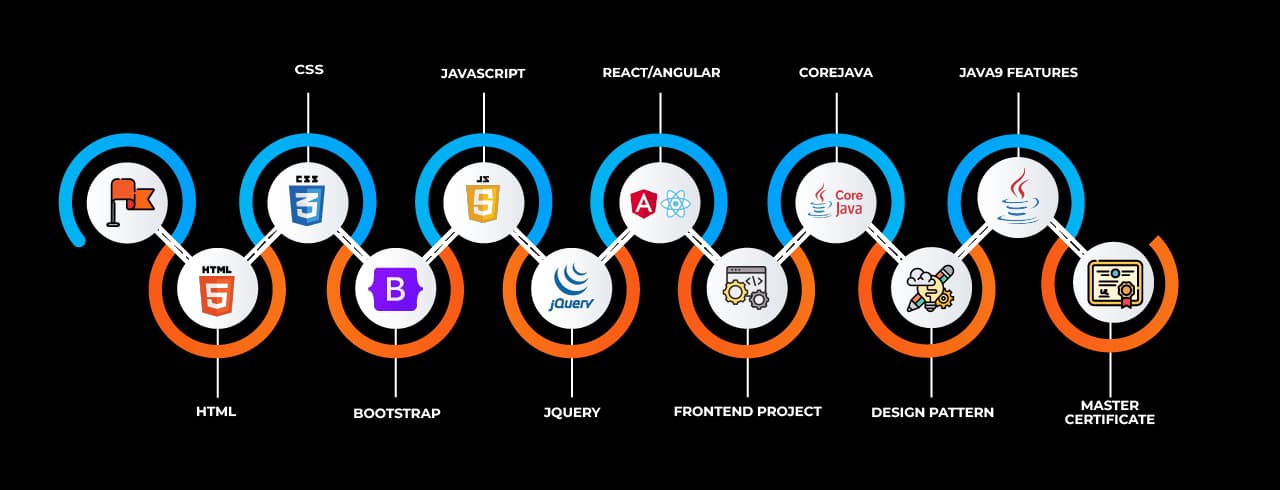
Learning curve for Java Full Stack in Australia

Master In Java Full Stack in Australia Course

OneCourseMultipleRoles

Empower your career with in-demand data skills and open doors to top-tier opportunities.

Junior Java Developer
Java Full Stack Developer
Trainee-FSD Java
Java Developer
Adv Java Developer
Senior Java Developer
Tech Lead
Sr. Tech Lead
Technical Manager

Skills & Tools You'll Learn -

Unit Testing  iconUnit Testing Test individual components of the application.
XML Handling iconXML HandlingWork with XML data formats using SQL functions and queries.
CSS3 iconCSS3Style websites with CSS3, including layouts, animations, and responsive design for an enhanced user
JavaScript  iconJavaScript Gain proficiency in JavaScript to add interactivity and dynamic behavior to web applications.
React.js iconReact.jsDevelop dynamic and high-performance front-end applications using the React.js library
Object-Oriented Programming (OOP) iconObject-Oriented Programming (OOP)A programming paradigm based on objects and classes.
Containment iconContainmentA relationship where one class contains an object of another class (HAS-A relationship).
Polymorphism iconPolymorphismAbility of an object to take multiple forms via method overloading and overriding.
Abstract Class iconAbstract ClassA class that cannot be instantiated and may contain abstract methods.
Enum iconEnumA special Java type representing a fixed set of constants.
Lambda Functions iconLambda FunctionsUse Python’s lambda functions for concise, anonymous function expressions in programming
Inheritance iconInheritanceMaster object-oriented programming (OOP) concepts to build modular and reusable code.
Exceptions iconExceptionsLearn to handle files and manage errors with exception handling techniques in Python.
Bootstrap  iconBootstrap Utilize Bootstrap to build mobile-first, responsive websites with pre-designed components and a grid system.
Angular iconAngularBuild dynamic and scalable web applications with Angular, utilizing TypeScript and two-way data binding.
Interface  iconInterface IDoc: An IDoc (Intermediate Document) is a standard data format used in SAP to exchange information between different systems.
React Hooks iconReact HooksSpecial functions like useState and useEffect that enable state and lifecycle management in React.
Maven  iconMaven A build automation tool primarily used for Java projects, managing dependencies and builds.
Core Java iconCore Java The fundamental part of Java programming, covering OOPs concepts, collections, and multithreading.
Spring Boot iconSpring Boot A framework that simplifies Spring application development with auto-configuration and embedded serve
Graphical User Interface (GUI) iconGraphical User Interface (GUI)Explore SAP GUI types (Windows and Java) and their role in user interaction.
SQL  iconSQL A database language for querying and managing structured data.
Swing  iconSwing A Java library for building desktop applications with rich UI components.
Object Serialization  iconObject Serialization Converting Java objects into a format for storage or transfer.
Collection Framework  iconCollection Framework Java’s built-in data structures like List, Set, and Map.
Functional-Style Programming iconFunctional-Style ProgrammingWriting concise, expressive Java code using lambda expressions.

Why Choose SevenMentor Java Full Stack in Australia

Empowering Careers with Industry-Ready Skills.

Specialized Pocket Friendly Programs as per your requirements

Specialized Pocket Friendly Programs as per your requirements

Live Projects With Hands-on Experience

Live Projects With Hands-on Experience

Corporate Soft-skills & Personality Building Sessions

Corporate Soft-skills & Personality Building Sessions

Digital Online, Classroom, Hybrid Batches

Digital Online, Classroom, Hybrid Batches

Interview Calls Assistance & Mock Sessions

Interview Calls Assistance & Mock Sessions

1:1 Mentorship when required

1:1 Mentorship when required

Industry Experienced Trainers

Industry Experienced Trainers

Class Recordings for Missed Classes

Class Recordings for Missed Classes

1 Year FREE Repeat Option

1 Year FREE Repeat Option

Bonus Resources

Bonus Resources

Curriculum For Java Full Stack in Australia

BATCH SCHEDULE

Java Full Stack in Australia Course

Find Your Perfect Training Session

Dec 28 - Jan 3

2 sessions
28
Sun
Classroom/ Online
Weekend Batch
03
Sat
Classroom/ Online
Weekend Batch

Jan 4 - Jan 10

1 sessions
05
Mon
Classroom/ OnlineToday
Regular Batch

Jan 11 - Jan 17

1 sessions
12
Mon
Classroom/ Online
Regular Batch

Learning Comes Alive Through Hands-On PROJECTS!

Comprehensive Training Programs Designed to Elevate Your Career

BudgetFlow App

BudgetFlow App

 PetPal App

PetPal App

TravelMate (Travel Planning Platform)

TravelMate (Travel Planning Platform)

GreenThumb (Gardening and Plant Care App)

GreenThumb (Gardening and Plant Care App)

 Personal Fitness Tracking App

Personal Fitness Tracking App

No active project selected.

Transform Your Future with Elite Certification

Add Our Training Certificate In Your LinkedIn ProfileLinkedIn

Our industry-relevant certification equips you with essential skills required to succeed in a highly dynamic job market.

Join us and be part of over 50,000 successful certified graduates.

Student 1
Student 2
Student 3
Student 4
Student 5
Join 15,258 others learning today
Certificate Preview

KEY Features that Makes Us Better and Best FIT For You

Expert Trainers

Industry professionals with extensive experience to guide your learning journey.

Comprehensive Curriculum

In-depth courses designed to meet current industry standards and trends.

Hands-on Training

Real-world projects and practical sessions to enhance learning outcomes.

Flexible Schedules

Options for weekday, weekend, and online batches to suit your convenience.

Industry-Recognized Certifications

Globally accepted credentials to boost your career prospects.

State-of-the-Art Infrastructure

Modern facilities and tools for an engaging learning experience.

100% Placement Assistance

Dedicated support to help you secure your dream job.

Affordable Fees

Quality training at competitive prices with flexible payment options.

Lifetime Access to Learning Materials

Revisit course content anytime for continuous learning.

Personalized Attention

Small batch sizes for individualized mentoring and guidance.

Diverse Course Offerings

A wide range of programs in IT, business, design, and more.

Course Content

About Java Full Stack

Java Full Stack Development is one of the most complete and sought-after skills in the IT business today. It encompasses the ability to work on both front-end and back-end development processes utilising Java-based technologies. A Java Full Stack Developer is skilled at client-side technologies such as HTML, CSS, and JavaScript, as well as server-side programming with Java, Spring Boot, and databases like MySQL or MongoDB. In Australia, the demand for competent full-stack experts, particularly those with Java expertise, is increasing across technology-driven industries such as finance, education, e-commerce, and government services.


Why Java for Full Stack?

Java has maintained its position as a leading programming language for enterprise-level development due to its platform independence, robustness, and extensive ecosystem. The Java Virtual Machine (JVM) allows developers to build scalable and high-performance applications that are deployable across multiple platforms. With frameworks like Spring Boot and Hibernate streamlining back-end development, and tools such as Angular, React, or Vue.js enabling responsive front-end interfaces, Java remains a cornerstone in full-stack architectures. The synergy between these technologies makes it ideal for professionals seeking to pursue Java Full Stack courses in Australia.


Comprehensive Curriculum and Learning Modules

The Java Full Stack Classes in Australia at SevenMentor are structured to provide a hands-on, industry-aligned curriculum that takes learners from basic programming concepts to advanced application deployment. Students begin with core Java concepts, including object-oriented programming, exception handling, multithreading, and Java collections. Following this foundation, the training transitions into front-end development, introducing learners to HTML5, CSS3, JavaScript, and modern front-end frameworks.

The back-end development module focuses on Spring Framework, specifically Spring Boot, which makes it easier to configure and construct production-ready applications. It teaches RESTful APIs, security, data access using JPA and Hibernate, and unit testing. Participants also study database management with MySQL and MongoDB, version control with Git, and continuous integration with Jenkins and Docker. This extensive coverage ensures that students are completely prepared to face real-world development problems.


Practical Exposure and Real-time Projects

One of the distinguishing aspects of Java Full Stack training in Australia is its emphasis on project-based learning. Each module includes capstone projects that simulate real-world scenarios, from developing a responsive e-commerce portal to building a microservices-based booking application. These projects not only solidify theoretical knowledge but also encourage learners to develop clean code, implement industry-standard design patterns, and adopt agile development methodologies.

By the end of the training, participants will have compiled a professional-grade portfolio showcasing their ability to work across the stack, from UI/UX interfaces to robust server-side logic and persistent data storage.


Career Scope in Australia

Australia has a flourishing IT ecosystem, bolstered by government digital initiatives and a high demand for IT professionals. Full Stack Developers, particularly those skilled in Java, are widely employed by startups, multinational corporations, and consulting firms. Java Full Stack Developer, Software Engineer, Backend Developer, and Application Developer are common jobs in cities such as Sydney, Melbourne, Brisbane, and Perth.

The employment market in Australia favors professionals who demonstrate a full-cycle development capability—from gathering client requirements to deploying applications and maintaining code. This is where enrolling in Java Full Stack courses in Australia becomes a career-defining decision for aspirants. Employers value the versatility of Full Stack Developers who can bridge communication gaps between front-end and back-end teams and expedite the product development cycle.


Learning Methodologies and Tools

The teaching methodologies employed in the Java Full Stack Classes in Australia combine theoretical sessions with hands-on labs, case studies, and peer collaboration. Advanced learning management systems are utilised to conduct code reviews, track progress, and provide mentor input. The training infrastructure includes tools like as IntelliJ IDEA, Postman, GitHub, Docker, and Maven to ensure that learners are fluent in the most recent development and deployment technologies.

Furthermore, the combination of test-driven development (TDD) and continuous integration/continuous delivery (CI/CD) pipelines prepares students for real-world DevOps situations. This balanced approach that includes theory, practicals, and current tooling ensures a well-rounded skill development pathway.


Importance of Version Control and CI/CD

Version control and CI/CD form the backbone of modern software development. Mastery in tools like Git for version control allows developers to track changes, collaborate on code, and manage deployments more effectively. CI/CD tools like Jenkins automate testing and integration processes, ensuring that applications are reliable and production-ready.

The Java Full Stack training in Australia ensures participants are adept at managing repositories, executing unit and integration tests, and deploying applications via containerized environments. Docker and Kubernetes are often introduced to allow learners to simulate production-level microservices-based deployments. Such exposure significantly boosts employability and confidence.


Soft Skills and Agile Methodologies

Beyond technical competence, Full Stack Developers must have a strong foundation in soft skills and agile project management. Working in cross-functional teams requires effective communication, cooperation, and time management skills. Agile approaches, such as Scrum and Kanban, are frequently integrated into curricula and teach students how to engage in daily stand-ups, sprint planning, and retrospectives.

During the Java Full Stack Classes in Australia at SevenMentor, participants also get exposure to collaborative development practices through team-based projects and Git workflows. These activities foster teamwork, peer learning, and adaptability to dynamic project requirements—traits highly valued in the software industry.


Certification and Assessment

At the end of the course, students participate in a final evaluation that includes coding challenges, project presentations, and technical interviews. Those who pass the evaluation are awarded a certification that verifies their Full Stack capabilities with a Java specialisation.

This credential not only increases the learner's professional credibility, but it also displays a dedication to lifelong learning. Many firms in Australia accept such credentials as proof of work readiness and technical proficiency.


About SevenMentor

SevenMentor, the best training institute for Java Full Stack Training is known for its excellence in delivering industry-relevant, cutting-edge training in multiple IT domains. The Java Full Stack program offered by SevenMentor is curated by expert trainers who bring years of industry experience and pedagogical expertise. The institute focuses on delivering outcome-based training, ensuring that students not only learn but also apply concepts effectively in real-life projects.

SevenMentor maintains a consistent track record of placing students in leading companies across Australia and beyond. Through mock interviews, resume building, and career counseling, the institute prepares candidates for competitive job markets. Its dedicated placement cell works with recruiters to match trained professionals with job opportunities tailored to their skill sets.


Enrolling in Java Full Stack courses in Australia equips learners with both the technical depth and real-world exposure necessary to succeed in this domain. Whether you're a fresh graduate looking to break into software development or an experienced professional seeking to upskill, the structured training offered in Java Full Stack Classes in Australia provides a comprehensive pathway. Through integrated learning, industry projects, and expert mentorship, learners emerge as well-rounded developers ready to contribute meaningfully in any organization.

For those seeking a career transformation or a new professional edge, investing in Java Full Stack training in Australia is a step towards a rewarding future in software development. The combination of technical skill, practical experience, and market relevance makes this training a valuable proposition for today's tech workforce.


Online Java Full Stack Training

SevenMentor offers exceptional online Java Full Stack Training. The online Java Full Stack training mirrors the classroom curriculum, with live instructor-led sessions, interactive assignments, and real-time project support. Sessions are recorded for revision and flexibility, allowing learners to study at their own pace while staying engaged with mentors and peers.

The online platform is equipped with collaborative tools, discussion boards, and virtual labs to simulate the classroom environment. Learners receive the same certification upon course completion and can also avail of placement assistance services. This online training model is ideal for working professionals, international learners, or students residing in remote areas of Australia.


Corporate Java Full Stack Course

SevenMentor offers a customized corporate Java Full Stack Course for organizations looking to upskill their workforces. These programs are customized to meet specific business goals and the technology stacks used by the client. Whether it's transitioning to microservices architecture or upgrading legacy systems, corporate training ensures that teams are aligned with current development best practices.

Delivered onsite or remotely, the corporate Java Full Stack training includes assessments, hands-on labs, and post-training support. By collaborating with HR and technical leaders, SevenMentor tailors the content to address existing skill gaps and fosters continuous innovation within the organization. Companies benefit from faster development cycles, better code quality, and improved team collaboration as a result of structured corporate training.

Frequently Asked Questions

Everything you need to know about our revolutionary job platform

1

Are Java Full Stack Developers in high demand?

Ans:
Organisations across sectors are looking for experts that can contribute to both client-side and server-side programming, therefore Java Full Stack Developers are in high demand. This high demand creates a wealth of career opportunities and competitive pay for skilled individuals.
2

Which company is ideal for a Java full stack developer?

Ans:
Java full-stack developers can expect to make a solid living in India. Here are some of the top organisations in India that are recruiting Java full-stack developers: TCS, Infosys, Wipro, Mindtree, Tech Mahindra, Cognisant Technology, IBM, and Accenture are among the companies involved.
3

What are the prerequisites for the Fullstack Java course?

Ans:
To be eligible for a Java Full Stack development course, you must normally have a high school diploma or equivalent, as well as a fundamental grasp of computers and, in many cases, some familiarity with programming concepts such as HTML, CSS, and possibly JavaScript.
4

Is full-stack Java a viable career option?

Ans:
Versatility and Flexibility. The full stack Java developers can transition smoothly between front-end and back-end development, making them valuable assets to any project. This adaptability not only boosts your skill set but also provides doors to different work prospects in the information technology industry.
5

What is a Java full stack developer's technology stack?

Ans:
In short, a Java full stack developer must be proficient in both front-end technologies (such as HTML, CSS, JavaScript, and WebSocket) and back-end skills.
6

What exactly is the backend of a Java complete stack? What exactly is Full Stack Development?

Ans:
A full stack developer develops both the front and back ends of a web application. The front end is in charge of the website's visual appearance and feel, whereas the back end is in charge of the site's backend logic and infrastructure.
7

What capabilities does a Java full stack expert have?

Ans:
Advanced Java Developer Tools expertise includes Eclipse IDE, Maven, and others. A skilled Java developer should be familiar with all of the Java programming tools. Eclipse, Maven, Git, or Jenkins are all options. These tools assist us in a variety of tasks such as developing code, managing dependencies, and tracking code modifications.
8

What exactly is Java full stack skills?

Ans:
A Java full-stack developer is skilled in a wide range of coding areas and often works on both the front and back ends of an application or software. They have database experience and even design expertise to create a positive user experience.
9

What are the advantages of running Java full stack?

Ans:
Versatility and Flexibility. One of the key benefits of pursuing a career in Java Full Stack Development is its flexibility. The full stack Java developers can transition smoothly between front-end and back-end development, making them valuable assets to any project.
10

What is the point of complete stack?

Ans:
Use basic design principles to convey ideas, information, products, and services on the internet. Use basic programming techniques to build websites. Manage website projects effectively with the resources at your disposal. Communicate, manage services, and present effectively.
11

Is it easy to learn the Java complete stack?

Ans:
Because of its vast scope, full stack development can be difficult to learn. It entails understanding both front-end and back-end technologies, which requires proficiency in a variety of programming languages, frameworks, and tools.
12

Is full-stack Java a viable career option?

Ans:
Versatility and Flexibility. The full stack Java developers can transition smoothly between front-end and back-end development, making them valuable assets to any project. This versatility not only broadens your skill set, but it also opens the door to a variety of professional options in the IT business.
13

What use does the Java complete stack serve?

Ans:
A full-stack Java developer is in charge of writing back-end code and software systems, as well as designing the front-end of software or websites in Java. Full-stack Java engineers frequently lead teams developing software, websites, or applications.
14

Which business is better for full-stack development?

Ans:
Radiansys Inc. is one of India's top full-stack web development firms, offering on-site, near-shore, and offshore services. Its core clients include Fortune 500 corporations, small and medium-sized enterprises, and startups in the United States. The company creates and implements one-of-a-kind software solutions to assist clients in achieving their goals.
15

Is Java appropriate for the complete stack?

Ans:
One of the key benefits of pursuing a career in Java Full Stack Development is its flexibility. Full Stack Developers who are fluent in Java can transition easily between front-end and back-end programming, making them invaluable assets to any project.

Explore Other Demanding Courses

No courses available for the selected domain.