SAP MM Course in Parel
 Master SAP MM & Become an In-Demand Procurement Expert
 Transform Your Career with Practical SAP MM Training
 SevenMentor’s SAP MM Training Gives Real-World Success
Start Today!
CONSULT WITHOUR ADVISORS
- Course & Curriculum Details
- Flexible Learning Options
- Affordable Learning
- Enrollment Process
- Career Guidance
- Internship Opportunities
- General Communication
- Certification Benefits
Learning Curve for SAP MM
Master In SAP MM Course
OneCourseMultipleRoles
Empower your career with in-demand data skills and open doors to top-tier opportunities.
Skills & Tools You'll Learn -
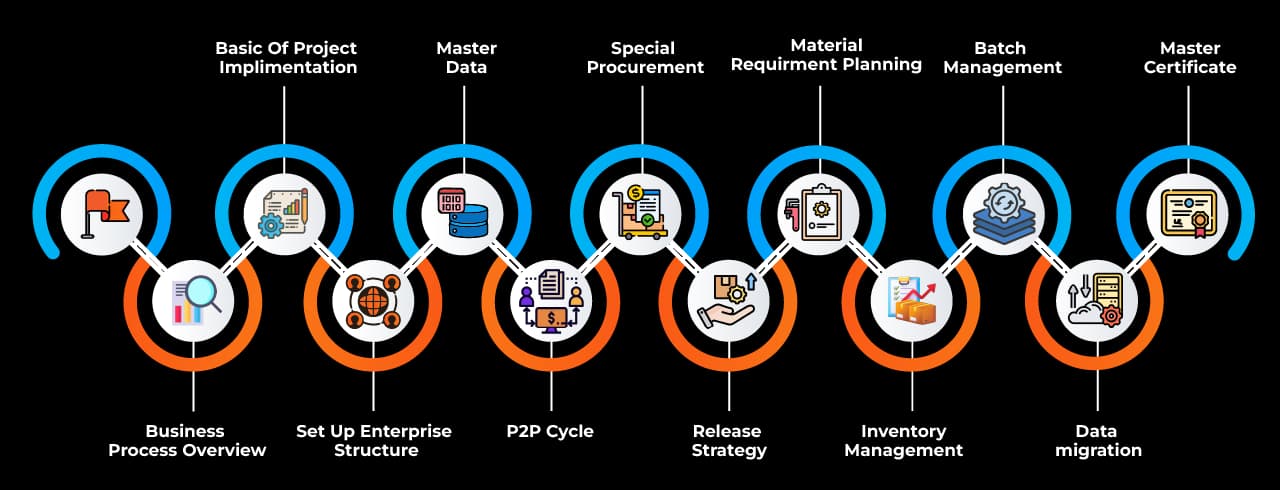
 Material Management Organization StructureThink of this like the backbone of SAP MM, defining how a company handles procurement and inventory across different locations.
 MM Master DataMaster data is the core information that stays constant over time, like materials, vendors, and purchasing details.
 Material Master Data This is where all details about a material—like its type, price, and storage conditions—are stored and managed in SAP.
 Vendor Master DataEvery vendor a company deals with has an entry in SAP that stores their details, payment terms, and transaction history.
 Source ListA list that tells SAP which vendors are approved to supply specific materials, helping automate procurement decisions.
 Service Master DataJust like materials, services like machine repairs or IT support need a master record to track their details.
 Purchasing Info RecordsThis keeps track of a vendor’s pricing, delivery terms, and past transactions for a particular material.
 Quota ArrangementWhen you want to split orders between multiple vendors, SAP lets you set quotas so no one vendor gets all the business.
 Basic ProcurementThis covers the entire process of buying materials, from raising requests to receiving goods and making payments.
 Procurement for Stock MaterialWhen a company buys materials to keep in stock for future use, SAP ensures proper tracking and valuation.
 Procurement for Non-Stock MaterialItems bought for immediate use (like office supplies) that aren’t stored in inventory but are still managed in SAP.
 Special ProcurementPipeline Procurement – This is when materials like fuel or water flow continuously through pipelines and are tracked in SAP without manual GRConsignment Procurement The vendor supplies materials, but you only pay when you actually use them, making it a cost-effective option.
 Subcontracting You send raw materials to a vendor, and they return a finished product—SAP helps track this entire process.
 Returnable Transport Packaging When vendors provide packaging that must be returned (like pallets), SAP helps track and manage these materials.
 Third-Party ProcurementSometimes, companies buy materials but have them delivered directly to the customer instead of their own warehouse.
-1741780771883.webp&w=96&q=75) STO (Stock Transfer Order) Used to transfer stock from one plant or warehouse to another, ensuring accurate inventory records.
STO (Stock Transfer Order) Used to transfer stock from one plant or warehouse to another, ensuring accurate inventory records.
-1741780805546.webp&w=96&q=75) P2P Cycle (Procure to Pay)This is the complete process of procurement—from requesting materials to receiving and paying for them.
P2P Cycle (Procure to Pay)This is the complete process of procurement—from requesting materials to receiving and paying for them.
-1741780836013.webp&w=96&q=75) PR (Purchase Requisition) The first step in buying something—employees request materials they need, and SAP tracks these requests.
PR (Purchase Requisition) The first step in buying something—employees request materials they need, and SAP tracks these requests.-1741781513379.webp&w=96&q=75) RFQ (Request for Quotation) When companies want to compare prices, they ask multiple vendors for quotations before placing an order.
RFQ (Request for Quotation) When companies want to compare prices, they ask multiple vendors for quotations before placing an order.
-1741781538700.webp&w=96&q=75) PO (Purchase Order)A formal document sent to a vendor, confirming what materials are needed, in what quantity, and at what price.
PO (Purchase Order)A formal document sent to a vendor, confirming what materials are needed, in what quantity, and at what price.
-1741781569597.webp&w=96&q=75) GR/GRN (Goods Receipt/Goods Receipt Note)When ordered materials arrive, SAP records the receipt to update stock levels and allow payments.
GR/GRN (Goods Receipt/Goods Receipt Note)When ordered materials arrive, SAP records the receipt to update stock levels and allow payments. Invoice VerificationThe step where the invoice from the vendor is checked against the purchase order and goods receipt before payment is made.
 Vendor Payment ProcessingAfter verifying invoices, SAP helps process payments based on agreed payment terms.Automatic POIn some cases, SAP can generate purchase orders automatically when stock levels go below a certain threshold.
Why Choose SevenMentor SAP MM
Empowering Careers with Industry-Ready Skills.

Specialized Pocket Friendly Programs as per your requirements

Live Projects With Hands-on Experience

Corporate Soft-skills & Personality Building Sessions

Digital Online, Classroom, Hybrid Batches

Interview Calls Assistance & Mock Sessions

1:1 Mentorship when required

Industry Experienced Trainers

Class Recordings for Missed Classes

1 Year FREE Repeat Option

Bonus Resources
Specialized Pocket Friendly Programs as per your requirements
Live Projects With Hands-on Experience
Corporate Soft-skills & Personality Building Sessions
Digital Online, Classroom, Hybrid Batches
Interview Calls Assistance & Mock Sessions
1:1 Mentorship when required
Industry Experienced Trainers
Class Recordings for Missed Classes
1 Year FREE Repeat Option
Bonus Resources

Fastest 1:1 doubt support

Flexible EMI Plans

Adaptive LMS

Free Wifi Facilities

Flexible Scheduling

Ongoing Career Support

Placement Drives

GitHub Project Implementations

Real World Topics

5/5 rating for 99% doubt Solutions

Be Different With Master Certificate

Latest Market Technology & Practical Training

Resume Building Session & Job Portals Training

Enhanced Capstone Projects for learning

Stand Out with an impressive Certificate

Weekday and Weekend Batches

Workshops & Seminars with Industry Experts

Unlimited Interview Calls

AWS Cloud Project Deployments

Live Quizzes

Resolve doubts any time through chat, voice notes, calling or meeting with instructors.
Curriculum For SAP MM
BATCH SCHEDULE
SAP MM Course
Find Your Perfect Training Session
Jul 5 - Jul 11
1 sessionsJul 12 - Jul 18
3 sessionsLearning Comes Alive Through Hands-On PROJECTS!
Comprehensive Training Programs Designed to Elevate Your Career

Procurement Process Automation

Inventory Management Optimization

Material Master Data Management

Vendor Management

Goods Receipt & Invoice Verification
No active project selected.
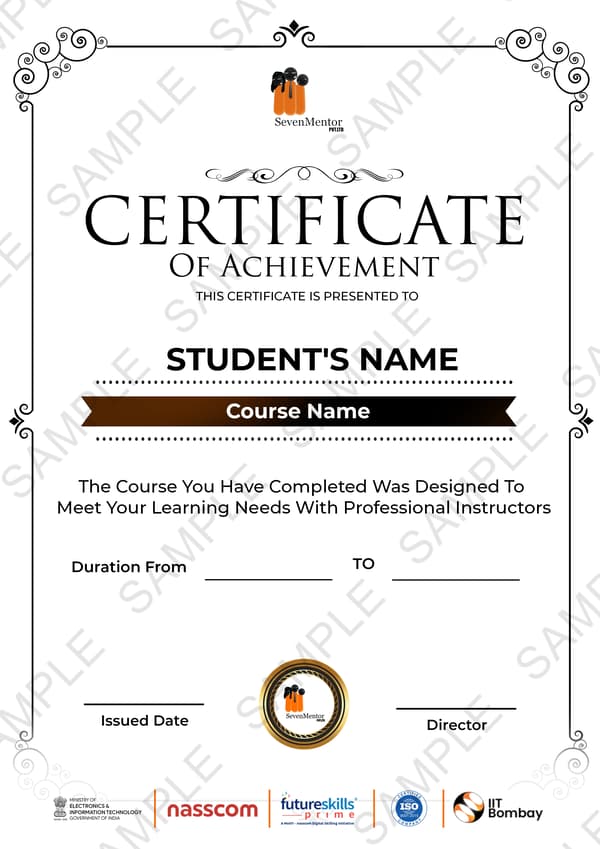
Transform Your Future with Elite Certification
Add Our Training Certificate In Your LinkedIn Profile
Our industry-relevant certification equips you with essential skills required to succeed in a highly dynamic job market.
Join us and be part of over 50,000 successful certified graduates.


KEY Features that Makes Us Better and Best FIT For You
Expert Trainers
Industry professionals with extensive experience to guide your learning journey.
Comprehensive Curriculum
In-depth courses designed to meet current industry standards and trends.
Hands-on Training
Real-world projects and practical sessions to enhance learning outcomes.
Flexible Schedules
Options for weekday, weekend, and online batches to suit your convenience.
Industry-Recognized Certifications
Globally accepted credentials to boost your career prospects.
State-of-the-Art Infrastructure
Modern facilities and tools for an engaging learning experience.
100% Placement Assistance
Dedicated support to help you secure your dream job.
Affordable Fees
Quality training at competitive prices with flexible payment options.
Lifetime Access to Learning Materials
Revisit course content anytime for continuous learning.
Personalized Attention
Small batch sizes for individualized mentoring and guidance.
Diverse Course Offerings
A wide range of programs in IT, business, design, and more.
Course Content
Frequently Asked Questions
Everything you need to know about our revolutionary job platform
Do I need to learn coding for SAP MM?
Is SAP MM a good career option for freshers?
What are the career opportunities after SAP MM Course?
Will I get placement support after this SAP MM course?
How long does it take to learn SAP MM?
Can I work as a freelancer after learning SAP MM?
Is SAP MM only useful for big companies?
Do I need a supply chain or logistics background to learn SAP MM?
How is SAP MM different from other ERP procurement modules?
Are SAP MM jobs in demand in India?
How much salary SAP MM Consultant can earn?
Do I need SAP experience before learning SAP MM?
Can this course help me in SAP MM certification?
Explore Other Demanding Courses
No demanding courses available at the moment.
Debug: courses prop type: object, isArray: yes, length: 0
Invest In Your Future With Skills That Matter.
Investing in the right skills at the right place paves the way for long-term career success and growth. SevenMentor Institute equips you with industry-relevant expertise, ensuring you stay ahead in an evolving job market.
Career Support:
Beyond technical training, we provide comprehensive career assistance, including resume building, interview coaching, and job placement support.
Recognized Certification:
Earn globally recognized certifications that validate your expertise and enhance your employability.
Company Tie-Ups:
We collaborate with leading corporations, startups, and multinational companies to provide our students with exclusive job opportunities, internships, and industry exposure.
Take the first step to fast-track your future!