Software Testing Automation Training in Andheri
 Master Software Automation Testing using SevenMentor's well-structured course.
 Develop thorough understanding of programming and testing techniques critical to actual software development.
 Improve your technical competencies and gain international career opportunities in automation and quality assurance.
Start Today!
CONSULT WITHOUR ADVISORS
- Course & Curriculum Details
- Flexible Learning Options
- Affordable Learning
- Enrollment Process
- Career Guidance
- Internship Opportunities
- General Communication
- Certification Benefits
Learning Curve for Software Testing Automation in Andheri
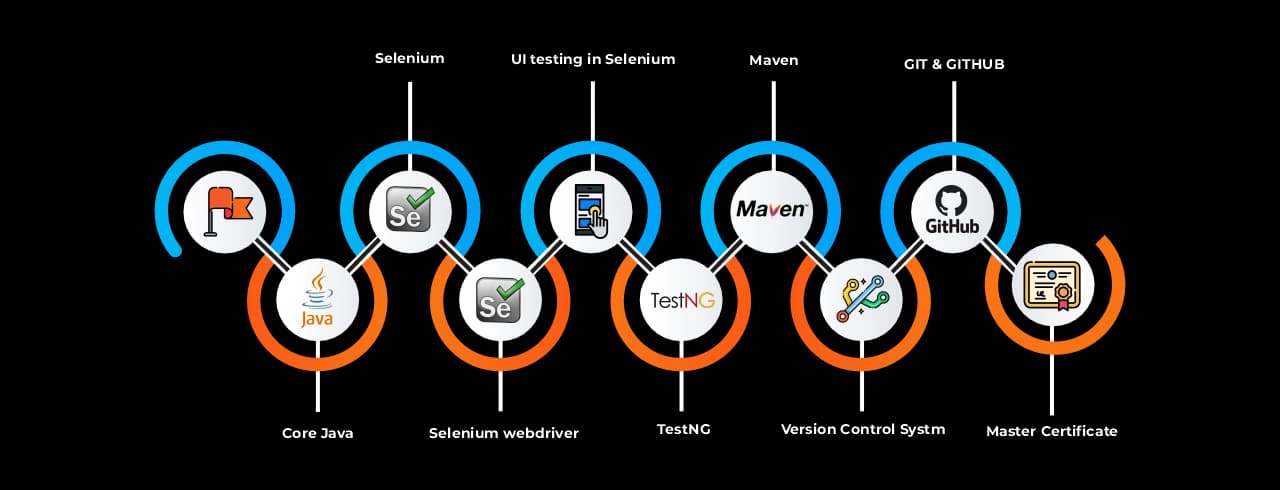
Master In Software Testing Automation in Andheri Course
OneCourseMultipleRoles
Empower your career with in-demand data skills and open doors to top-tier opportunities.
Skills & Tools You'll Learn -
 Automation TestingMaster tools like Selenium to automate test cases.
 GitHubGitHub
 Jenkins An open-source automation tool for implementing CI/CD pipelines.
 Maven A build automation tool primarily used for Java projects, managing dependencies and builds.
 Control Flow Statements Master decision-making and looping constructs to control program flow efficiently. These statements are crucial for implementing logic and improving code efficiency.
 Arrays Storing, accessing, and manipulating collections of data in JavaScript.
 Git A version control system for tracking code changes and collaboration.
 Introduction to Java Learn Java basics and how it powers enterprise applications.
 Java Language Fundamentals Core syntax, datatypes, and control structures in Java.
 Exception HandlingManage runtime errors using try-catch blocks.
 Collection FrameworkJava structures like List, Set, Map for data management.
 FunctionsReusable blocks of organized code that perform specific tasks, helping to simplify complex programs and improve modularity and clarity.
 Encapsulation The practice of restricting access to the internal state and behavior of an object, allowing only controlled interaction through public methods.
 Inheritance A mechanism in object-oriented programming that allows one class to inherit attributes and methods from another, enabling code reuse and hierarchy.
 Polymorphism The ability of different classes to respond to the same method call in different ways, allowing functions to use entities of different types at runtime.
 Abstraction The concept of hiding complex implementation details and showing only essential features of an object, improving code readability and maintainability.
 Software The foundational part of Java used for building general-purpose applications.
 Conditional StatementsDecision-making constructs like if, else if, and switch in Java.
 ConstructorA special method used to initialize objects when a class is instantiated.
 Scanner ClassA utility class to read user input from various input sources like keyboard or files.
 Object Oriented ProgrammingA programming paradigm based on objects and classes encapsulating data and behavior.
 Overloading & OverridingOverloading allows multiple methods with the same name; overriding redefines a method in a subclass.
 Abstract Class & InterfaceAbstract classes provide partial implementation, while interfaces define pure abstraction
 String An immutable sequence of characters used to represent text.
 StringBufferA thread-safe, mutable sequence of characters
 StringBuilderA non-thread-safe, mutable sequence of characters optimized for single-threaded performance.
 Wrapper ClassClasses that wrap primitive types into objects (e.g., Integer, Double).
 Introduction of SQLBasics of Structured Query Language for managing and querying relational databases.
 Selenium ComponentKey modules of Selenium including IDE, WebDriver, and Grid.
 Selenium WebDriverA web automation tool that allows control over browsers programmatically.
 Selenium ArchitectureThe internal structure of Selenium including its drivers, bindings, and APIs.
 Browser HandlingAutomating browser actions like opening, closing, and switching between tabs or windows.
 Locating ElementsIdentifying HTML elements using locators like ID, name, XPath, and CSS selectors.
 Handling Web ElementsInteracting with input fields, buttons, checkboxes, and other page elements.
 SynchronizationManaging wait times to ensure that web elements load before interacting with them.
 Handling WindowsSwitching between multiple browser windows or tabs during test execution.
 Alerts and FramesManaging JavaScript pop-ups and working within HTML <iframe> elements.
 ActionsClass used for performing advanced user interactions like drag-and-drop or hover.
 Selenium FrameworksStructured approaches to Selenium automation such as Data-Driven and Hybrid frameworks.
 POMPage Object Model, a design pattern that enhances test maintenance and readability.
 TestNGA testing framework inspired by JUnit for test configuration, grouping, and reporting.
 Zephyr SquadA test management tool integrated with Jira for tracking test execution.
Why Choose SevenMentor Software Testing Automation in Andheri
Empowering Careers with Industry-Ready Skills.

Specialized Pocket Friendly Programs as per your requirements

Live Projects With Hands-on Experience

Corporate Soft-skills & Personality Building Sessions

Digital Online, Classroom, Hybrid Batches

Interview Calls Assistance & Mock Sessions

1:1 Mentorship when required

Industry Experienced Trainers

Class Recordings for Missed Classes

1 Year FREE Repeat Option

Bonus Resources
Specialized Pocket Friendly Programs as per your requirements
Live Projects With Hands-on Experience
Corporate Soft-skills & Personality Building Sessions
Digital Online, Classroom, Hybrid Batches
Interview Calls Assistance & Mock Sessions
1:1 Mentorship when required
Industry Experienced Trainers
Class Recordings for Missed Classes
1 Year FREE Repeat Option
Bonus Resources

Fastest 1:1 doubt support

Flexible EMI Plans

Adaptive LMS

Free Wifi Facilities

Flexible Scheduling

Ongoing Career Support

Placement Drives

GitHub Project Implementations

Real World Topics

5/5 rating for 99% doubt Solutions

Be Different With Master Certificate

Latest Market Technology & Practical Training

Resume Building Session & Job Portals Training

Enhanced Capstone Projects for learning

Stand Out with an impressive Certificate

Weekday and Weekend Batches

Workshops & Seminars with Industry Experts

Unlimited Interview Calls

AWS Cloud Project Deployments

Live Quizzes

Resolve doubts any time through chat, voice notes, calling or meeting with instructors.
Curriculum For Software Testing Automation in Andheri
BATCH SCHEDULE
Software Testing Automation in Andheri Course
Find Your Perfect Training Session
Jul 5 - Jul 11
1 sessionsJul 12 - Jul 18
3 sessionsLearning Comes Alive Through Hands-On PROJECTS!
Comprehensive Training Programs Designed to Elevate Your Career

E-Learning Application (SAT)

Banking Application (SAT

Employee Management Portal (SAT)

Online Ticket Booking Application (SAT)
No active project selected.
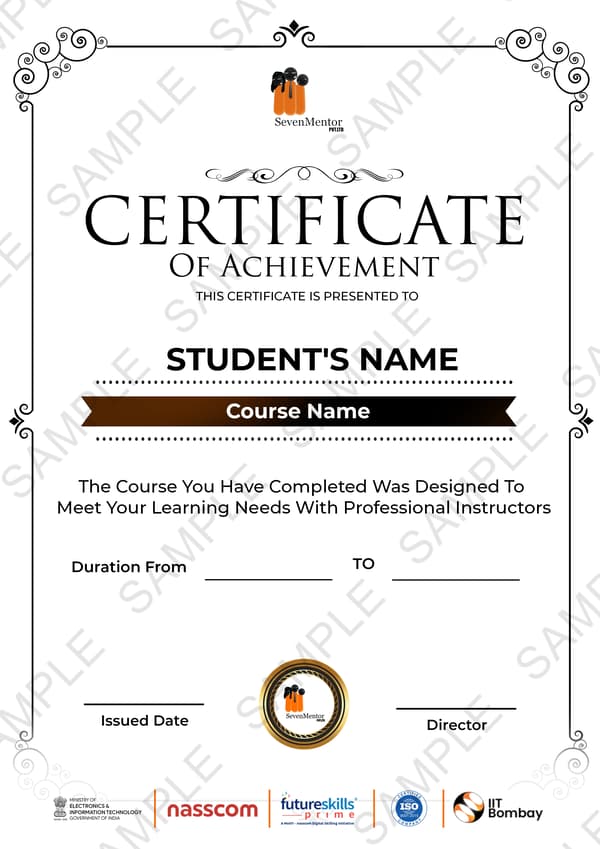
Transform Your Future with Elite Certification
Add Our Training Certificate In Your LinkedIn Profile
Our industry-relevant certification equips you with essential skills required to succeed in a highly dynamic job market.
Join us and be part of over 50,000 successful certified graduates.


KEY Features that Makes Us Better and Best FIT For You
Expert Trainers
Industry professionals with extensive experience to guide your learning journey.
Comprehensive Curriculum
In-depth courses designed to meet current industry standards and trends.
Hands-on Training
Real-world projects and practical sessions to enhance learning outcomes.
Flexible Schedules
Options for weekday, weekend, and online batches to suit your convenience.
Industry-Recognized Certifications
Globally accepted credentials to boost your career prospects.
State-of-the-Art Infrastructure
Modern facilities and tools for an engaging learning experience.
100% Placement Assistance
Dedicated support to help you secure your dream job.
Affordable Fees
Quality training at competitive prices with flexible payment options.
Lifetime Access to Learning Materials
Revisit course content anytime for continuous learning.
Personalized Attention
Small batch sizes for individualized mentoring and guidance.
Diverse Course Offerings
A wide range of programs in IT, business, design, and more.
Course Content
Frequently Asked Questions
Everything you need to know about our revolutionary job platform
What is the Software Automation Testing Course at SevenMentor Institute?
What is Selenium?
What is automation testing?
Why is automated testing required?
What career opportunities can I pursue after completing my course?
As a manual tester, will this course be helpful for me?
How will this course help me in my software testing career?
Does this course offer a practical approach towards taught concepts?
Why to use Java for automation testing?
Are SevenMentor's Software Automation Testing trainers certified?
What's the fee structure for the Software Automation Testing Course?
Is programming necessary for learning Software Automation Testing?
Will I get a certificate after completing the Software Automation Testing Course offered by SevenMentor ?
Will you provide placement?
How to join SevenMentor's Software Automation Testing Course?
Explore Other Demanding Courses
No demanding courses available at the moment.
Debug: courses prop type: object, isArray: yes, length: 0
Invest In Your Future With Skills That Matter.
Investing in the right skills at the right place paves the way for long-term career success and growth. SevenMentor Institute equips you with industry-relevant expertise, ensuring you stay ahead in an evolving job market.
Career Support:
Beyond technical training, we provide comprehensive career assistance, including resume building, interview coaching, and job placement support.
Recognized Certification:
Earn globally recognized certifications that validate your expertise and enhance your employability.
Company Tie-Ups:
We collaborate with leading corporations, startups, and multinational companies to provide our students with exclusive job opportunities, internships, and industry exposure.
Take the first step to fast-track your future!